
Development and Computational Analysis of a Pump Hydro Storage System for Optimizing Electrical Grid Performance Using HOMER Energy Modelling Tool
Abstract
The purpose of this study is to propose a sustainable solution that can provide a reliable power supply to meet the energy demands of higher institutions in Nigeria, through the design and simulation of a pump storage hydroelectric power plant. The unreliable power supply in Nigeria has been a major challenge for most higher institutions, affecting research and productivity. The methodology involved data collection on energy consumption patterns, system design of the pump storage hydro-electric power model, simulation of the system using the Hybrid Optimization Model for Electric Renewables (HOMER) software, and optimization of the design to meet the energy demands of the polytechnic. The data collected included peak demand periods and energy consumption patterns for various facilities within the institution. The system design considered the installation of a pump storage hydro-electric power system that can generate and store electricity during off-peak hours for use during peak demand periods. A peak load of 4kW requirement and daily demand of 82kWh/day, with a load factor of 37%, volumetric flow rate of 0.032 m3/s, and reservoir height of 16m were considered for the model designed. The simulation result showed a positive Net Present Value (NPV) of $11,757.14, indicating a good future value of the project in present times with a Levelized cost of Energy of $0.0304 (N51/kWh) and an annual maintenance cost of $600. The simulation results from HOMER software indicate that the pump storage hydro-electric power model is a feasible solution for enhancing electricity supply in most Nigerian institutions.
Keywords:Hydro storageHybrid optimization model for electric renewablesElectrical gridRenewable energy
1. Introduction
Due to inadequate electricity supply in Nigeria, higher institutions such as Akwa Ibom State Polytechnic are plagued by frequent power outages and unreliable electricity supply, which disrupts academic activities and research work, resulting in the adoption of high alternative cost of power sources. Therefore, higher institutions in Nigeria often rely on expensive diesel generators to supplement the inadequate grid electricity supply, leading to high operational costs and a significant impact on the Internally Generated Revenue (IGR) of these institutions. Studies have shown that inadequate power supply has a detrimental impact on Nigerian higher institutions [1].
Inadequate power supply has led to security issues, as higher institutions in Nigeria have recently become unsafe, due to the increase in student abductions, which is a particularly alarming trend. For example, public outcry was caused by Boko Haram insurgents’ kidnap of 276 female students from Chibok secondary school, Borno State on April 14, 2014 [2], [3], kidnaping of 113 Dapchi children in Yobe State on February, 2018 [4], and other kidnapping related incident such as the 287 students abducted on March, 2022 in Kuriga, in northwest Kaduna State.
The security issues plaguing Nigerian institutions, particularly the alarming rate of student abductions, are exacerbated by the inadequate power supply that hinders the installation and functionality of security cameras. Security cameras provide valuable evidence that can aid in the investigation and prosecution of offenders, helping to ensure justice for victims and prevent future incidents. Without a reliable source of electricity, institutions are unable to install and maintain security cameras that are crucial for monitoring and deterring criminal activities on campus.
Furthermore, with an inadequate supply of electricity in most Nigerian institutions, there is a situation of low research output and limited career advancement. Low research output can hinder academic opportunities and career progression for academic staff of this institution. The incessant supply of electricity will also result in insufficient research experience which can limit an individual's expertise and reputation in their field and can result in decrease of research funding opportunities.
Hybrid Optimization Model for Electric Renewables (HOMER) is a widely used software tool for designing and analyzing hybrid renewable energy systems. It enables the optimization of energy production, storage, and distribution by considering various parameters, including renewable energy sources, energy storage options, load profiles, and economic factors [5].
The primary goal of HOMER is to maximize the utilization of renewable energy sources while ensuring a reliable and cost-effective power supply [6]. By considering the unique characteristics and availability of different renewable energy sources, such as solar, wind, hydro, and biomass, HOMER can effectively evaluate their integration into a hybrid system Mousavi et al. [7].
The software employs advanced optimization algorithms to determine the optimal mix of energy sources, storage technologies, and power distribution strategies [8]. HOMER has been employed in numerous studies to optimize power supply systems in different settings. For instance, Dodo et al. [9] utilized HOMER to optimize an Autonomous hybrid power system for an academic institution. The study demonstrated the effectiveness of HOMER in achieving high renewable energy penetration and improving the reliability of the power supply.
The study conducted by Arévalo et al. [10] serves as a testament to the effectiveness of HOMER in addressing the specific energy needs of academic institutions. By considering factors such as the energy demand profile of the institution, available renewable energy resources, and the potential for energy storage, HOMER facilitated the identification of an optimal solution that balanced energy production and consumption. The researchers found that the optimized hybrid power system reduced reliance on non-renewable energy sources, resulting in significant environmental benefits. Furthermore, HOMER's ability to assess economic factors enables decision-makers to evaluate the financial viability of different system configurations. It considers parameters such as equipment costs, maintenance expenses, fuel prices, and incentives for renewable energy generation [11].
Through these economic analyses, stakeholders can make informed decisions regarding the implementation of hybrid renewable energy systems, taking into account both environmental and financial considerations [12]. HOMER has been extensively utilized in numerous studies across various settings to optimize power supply systems. For example, [13] applied HOMER to optimize the configuration of a microgrid in a rural area. Their research demonstrated that HOMER was instrumental in identifying the most suitable mix of renewable energy sources and energy storage technologies to ensure a reliable and sustainable power supply. Additionally, [14] utilized HOMER in the optimization of a hybrid renewable energy system for a remote community. The study showcased the software's capability to consider different scenarios, such as variations in load demand and the availability of renewable resources, in order to determine the most optimal system configuration. The researchers concluded that HOMER enabled the design of a cost-effective system that maximized renewable energy utilization and improved the energy independence of the community.
HOMER is a widely recognized and versatile software tool for the design and analysis of hybrid renewable energy systems [15], [16]. It offers advanced optimization algorithms that consider various parameters, including renewable energy sources, energy storage options, load profiles, and economic factors. The software has been successfully employed in multiple studies, including optimizing power supply systems for academic institutions' microgrids in rural areas, and hybrid renewable energy systems for remote communities [17], [20]. These studies demonstrate the effectiveness of HOMER in achieving high renewable energy penetration, enhancing system reliability, and considering economic viability in designing sustainable energy solutions. The objectives of the study are focused on developing the load profile in Akwa Ibom State Polytechnic, designing and simulating a pump storage hydroelectric power system using HOMER Software, and analyzing the potential energy output and efficiency of the system.
2. Materials and Methods
2.1 Materials
The following hardware and software-based tools or components were used to achieve the research objectives, as seen in Table 1.
Table 1. Software components.
This table is shown in the PDF version of the article.
2.2 Research Methodology
The methodology proposed for this study includes the following:
I. Detailed procedure for conducting a load audit in Akwa Ibom State Polytechnic.
II. A comprehensive approach for developing a hydro pump storage model for improving the electric power supply at Akwa Ibom State Polytechnic using HOMER.
Description of the Study Area
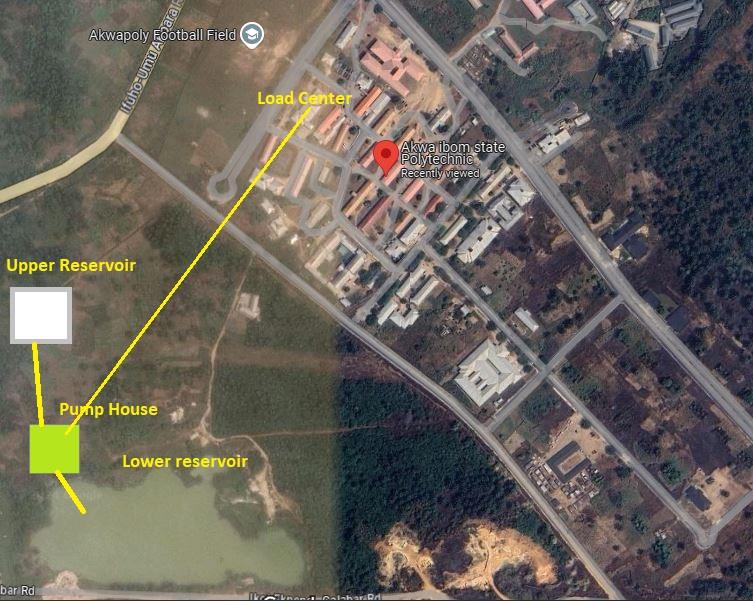
I. Geolocation of the lower reservoir: Latitude: 5.152585, Longitude: 7.665.
II. Upper reservoir: Latitude: 5.155224, Longitude: 7.664764 as seen in Fig. 1.
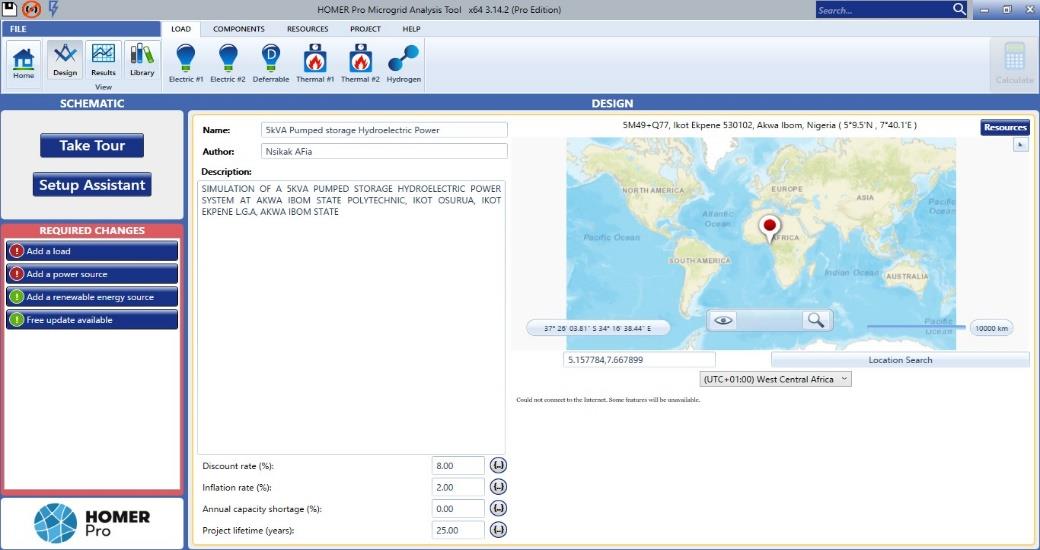
III. Coordinate of the load center at Akwa Poly: Latitude: 5.157784, Longitude: 7.667899.
2.3 Methodology for Load Audit in Akwa Ibom State Polytechnic
In order to effectively conduct a load audit of electrical power demand in a Polytechnic, a step-by-step methodology must be followed. This process is crucial for identifying areas of inefficiency and potential cost savings, as well as ensuring the overall reliability and safety of the electrical system. The following steps outline a comprehensive approach to conducting a load audit in Akwa Ibom State Polytechnic.
I. Data collection: The first step in conducting a load audit is to gather all relevant data related to the electrical power demand in the Polytechnic. Data includes information on the size and layout of the facility, as well as historical data on energy consumption and demand patterns. It is also essential to collect data on the types and quantities of electrical equipment and appliances in use, as well as any recent changes or upgrades to the electrical system.
II. Power quality analysis: Once the data has been collected, the next step is to conduct a power quality analysis to assess the overall health and efficiency of the electrical system. Power quality analysis involves measuring parameters such as voltage, current, power factor, and harmonic distortion, and identifying any issues that may be affecting the quality of the power supply. This analysis can help to pinpoint areas of inefficiency and potential sources of energy waste.
III. Load profiling: After conducting a power quality analysis, the next step is to create a load profile for the Polytechnic. Load profiling involves analysing the energy consumption patterns of different areas of the facility, such as classrooms, laboratories, offices, and common areas. By identifying peak demand periods and load profiles, it is possible to optimize the operation of the electrical system and reduce energy costs.
IV. Energy audit: Once the load profiling has been completed, the next step is to conduct an energy audit to identify opportunities for energy savings and efficiency improvements. An energy audit involves assessing the performance of electrical equipment and systems, as well as identifying potential upgrades or retrofits that could reduce energy consumption. An energy audit can also help to identify any maintenance issues or operational practices that may be contributing to energy waste.
V. Recommendations and implementation: Based on the findings of the load audit, recommendations can be made for improving the efficiency and reliability of the electrical system in the Polytechnic. These recommendations may include upgrading to more energy-efficient equipment, implementing energy management strategies, or making changes to operational practices. It is crucial to prioritize recommendations based on their potential impact and feasibility, and to develop a plan for implementing them in a timely manner.
Conducting a load audit of electrical power demand in Akwa Ibom State Polytechnic requires a systematic and thorough approach. By following the steps outlined in this methodology, it is possible to identify opportunities for energy savings, improve the reliability of the electrical system, and ensure the overall sustainability of the facility.
By taking a proactive approach to managing electrical power demand, Akwa Ibom State Polytechnics can reduce costs, enhance operational efficiency, and contribute to a more sustainable future.
2.4 Electricity Requirement of Akwa Ibom State Polytechnic
To assess the current electricity requirement in Nigerian higher institutions, for example, Akwa Ibom State Polytechnic. To achieve that, the approach employed involved identifying the facilities, systems and processes for which energy needs to be determined, as well as the time period for the analysis.
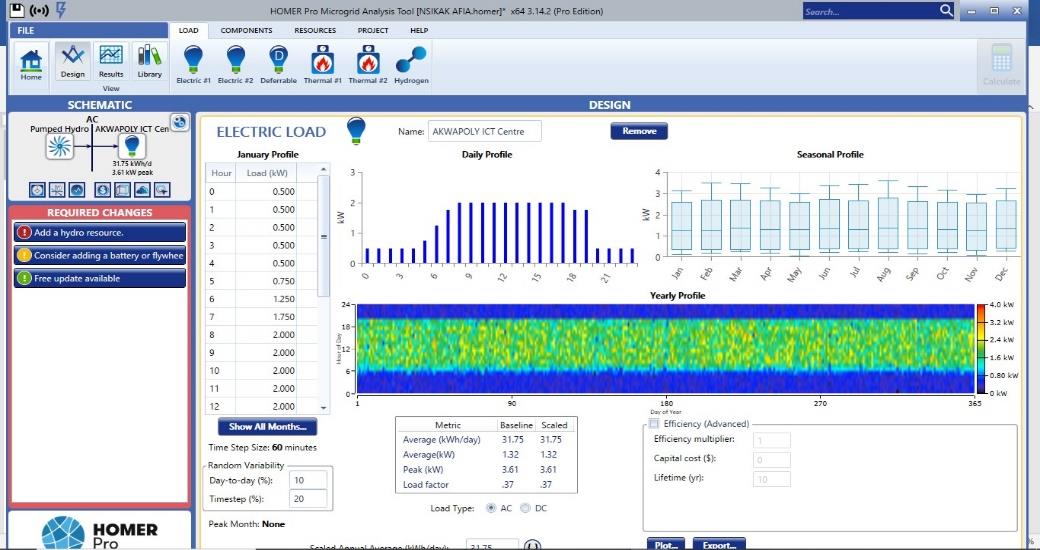
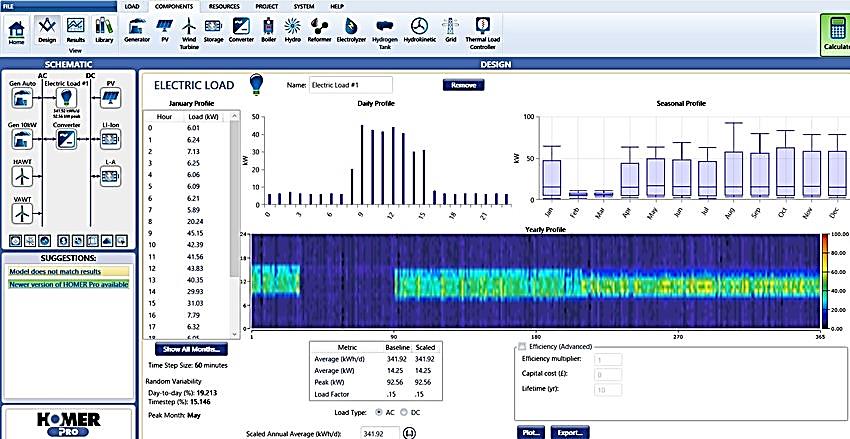
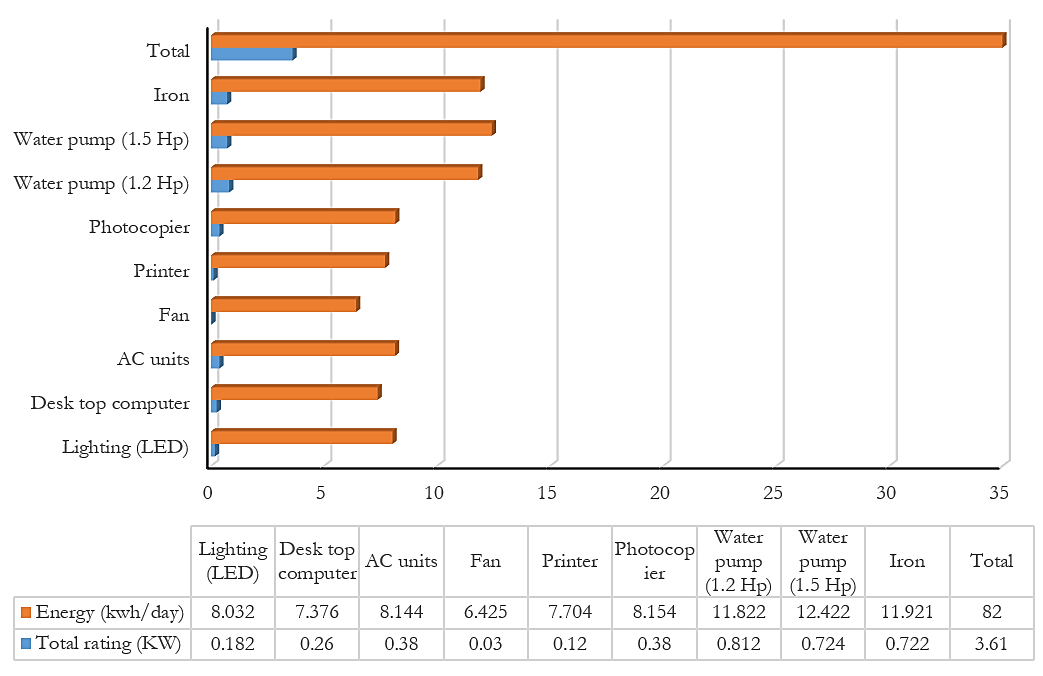
It included gathering information for electrical equipment and appliances such as power ratings, operating hours, and efficiency. Having done that, the major electrical facilities identified include lighting (LED) desk top computer, AC units, fan, printer, photocopier, water pump (1.2 Hp), water pump (1.5 Hp) and iron. The ratings as specified on each facility were applied to the load audit for effective determination of power requirement in Akwa Ibom State Polytechnic. For the simulation, the load profile on the HOMER interface is presented in Fig. 3.
2.5 Approach for Developing Hydro Pump Storage Model Using Hybrid Optimization Model for Electric Renewables Technology
The proposed methodology for the research project on the development of a pump model for improving electric power supply at Akwa Ibom State Polytechnic using HOMER technology involves several key steps. These steps outline the process of designing, implementing, and evaluating the pump model to optimize the utilization of renewable energy sources and improve the power supply reliability. The proposed methodology is as in Fig. 4.
The capital cost is broken down as shown in Table 2.
Table 2. Breakdown of the capital cost.
This table is shown in the PDF version of the article.
2.6 Pump Model Design
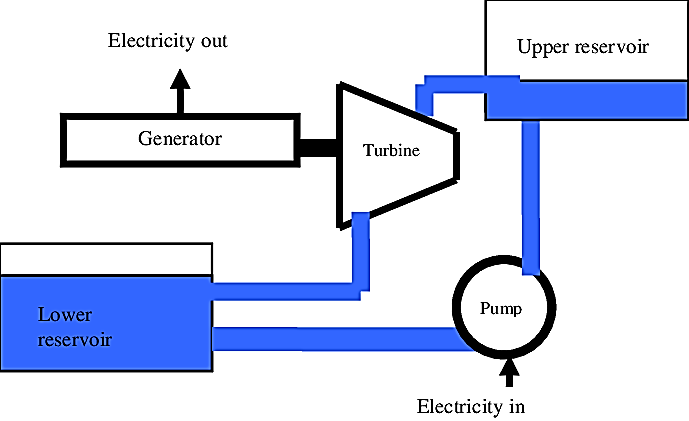
Based on the system model and simulation results, the pump model for energy storage and distribution will be designed as seen in Fig. 5.
The pump model will be responsible for capturing and storing excess renewable energy during periods of high generation and supplying stored energy during periods of low generation or high demand.
The design of the pump model will consider factors such as energy storage capacity, efficiency, reliability, and cost-effectiveness. The goal is to develop a pump model that maximizes renewable energy utilization and ensures a reliable power supply.
2.7 Pump Selection
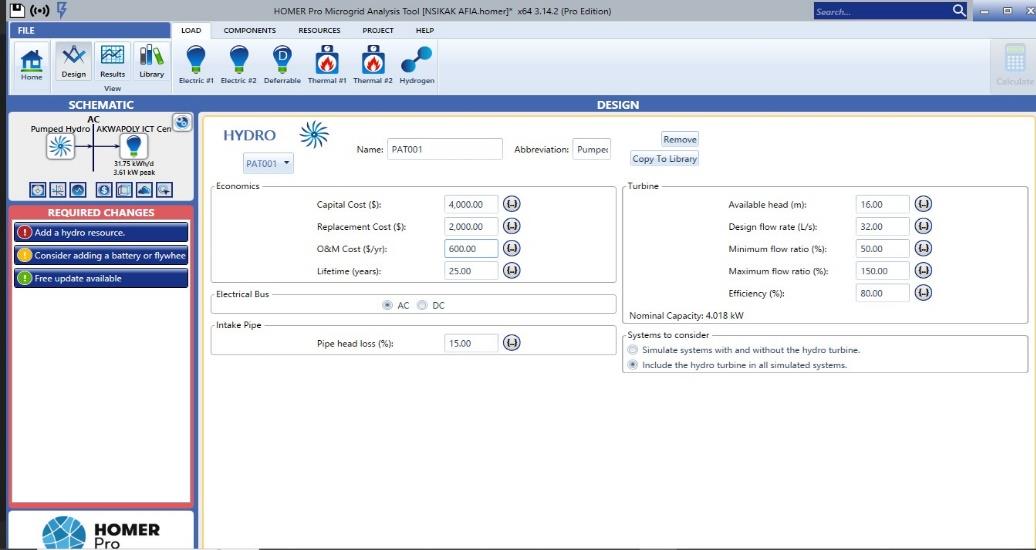
An optimized Pump as a Turbine (PAT) suitable for the above-mentioned scenario was selected from the HOMER Library and has the following specifications.
I. Design flow rate-32l/s.
II. Available head-16m.
III. Minimum flow ratio-50%.
IV. Maximum flow ratio-150%.
V. Pipe head loss-15%.
VI. Nominal capacity: 4018 kW.
VII. O&M cost/yr-$600.
VIII. Capital cost-$6,000.
IX. Replacement Cost-$2000.
X. Life span.-25yrs
2.8 Hydro Resource
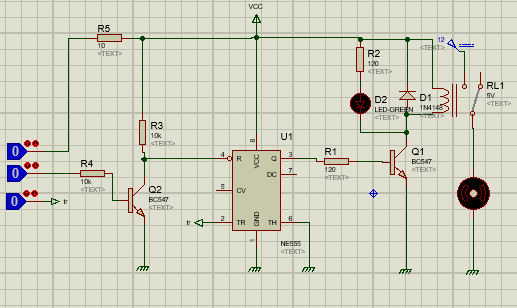
Considering the design of the pumped hydroelectric system, a uniform flow rate of 32l/s (0.03m3/s) was assumed since the system is not affected by rainfall. The availability of water at the lower reservoir was also to be regular across the seasons (see Fig. 6 and Fig. 7).
2.9 System Modeling and Simulation
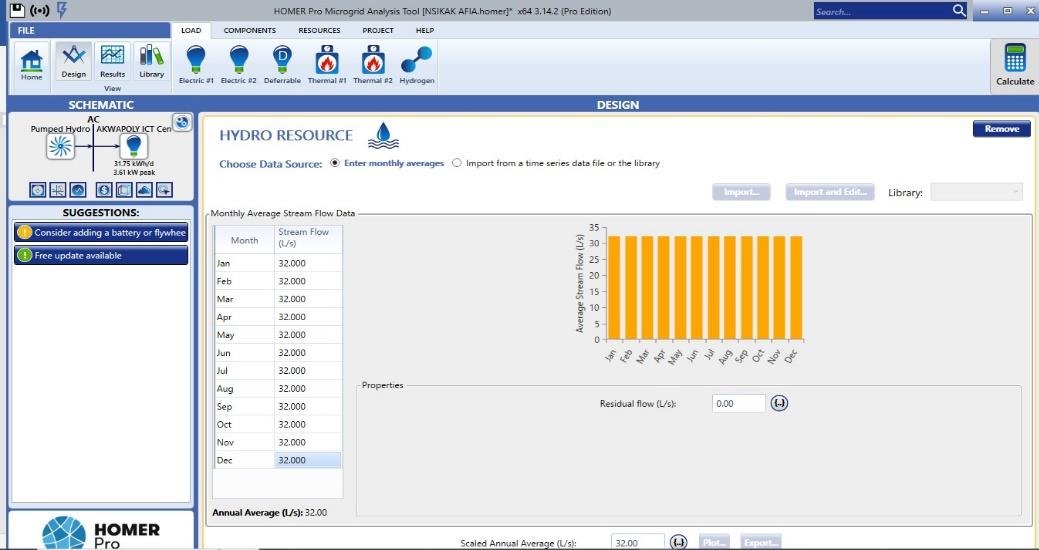
Using the HOMER software tool, a detailed system model will be created to simulate the hybrid renewable energy system for Akwa Ibom State Polytechnic (See Fig. 8 and Fig. 9). The model will include the renewable energy sources such as solar and hydro power, the existing power infrastructure, and the proposed pump model for energy storage and distribution. The HOMER software will allow for the optimization of system parameters, considering factors such as energy generation, consumption, storage capacity, and cost.
2.10 Data Collection and Analysis
The first step involves collecting relevant data related to the power supply infrastructure, energy consumption patterns, and renewable energy potential at Akwa Ibom State Polytechnic. This data would be obtained considering the following.
I. Reservoir (Inyang Anwankwo) II. Mini-hydro power turbine III. Electric pump IV. Generating the output module V. Energy controller And through site visits, interviews with relevant stakeholders, and existing reports and documentation. The collected data will be analyzed to identify the energy demand profile, assess the existing power infrastructure, and determine the potential renewable energy sources available for integration.
2.11 Grid Electricity
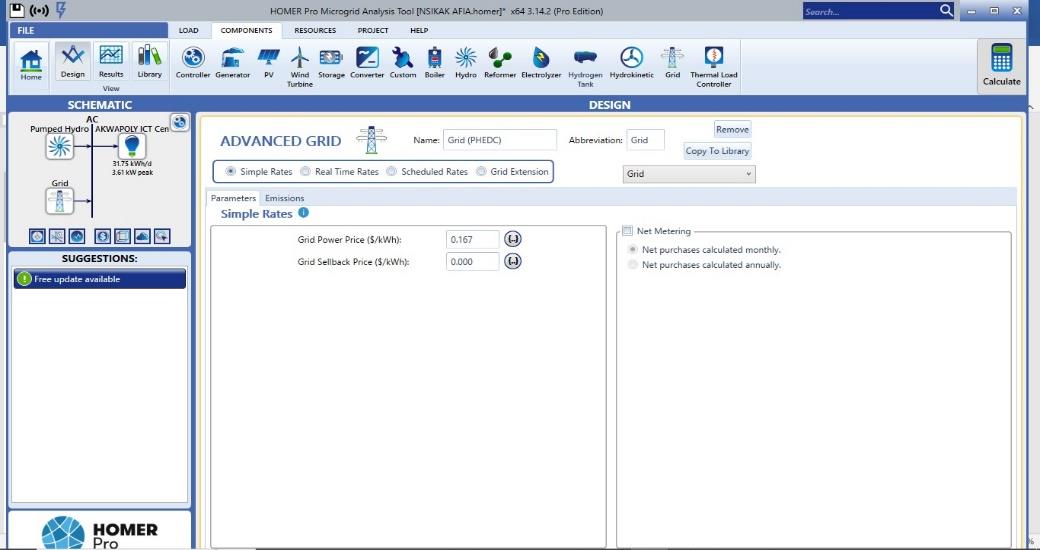
The institution currently uses electricity from PHEDC at the Band A tariff. The cost/kWh is at N250 ($0.167)
3. Results and Discussion
3.1 Upper Reservoir Design Head
The reservoir is mounted at the top of a 4-storey building available in the study area.
The height of the building is measured as 16m. The volume of the reservoir was determined as follows: The flow rate Q is given by the equation below:
Q = . (1)
ρgηtH Where p denotes power measured in Watts, W, Q is the flow rate in cubic meters per second, ρ is the density of the fluid, g indicates the acceleration due to gravity, ηt represents the total efficiency of the system, and H denotes the Head or pressure (Usually measured in meters, m).
P = 4kW ηt = 0.8
ρ = 997Kg/m3 ( is the density of water in kg/m3 = 997 kg/m3) g = 9.8m/s2 H = 16m Q = .
997 × 9.8 × 0.8 × 16 Q = 0.032m3/s (32l/s) The volumetric flow rate Qv per day is given as:
Qv = Q × 86400.
Qv = 0.032 x 86400 Q = 2,763.39m3/s The minimum reservoir capacity is determined using Eq. (2).
V = 259200 × Q(m ). (2) V = 259200 x 0.032 V = 8294.44m3 Considering a sizing factor of 1.1 as et al. [21] recommended, V = 9123.84m3 Thus, the estimated volume of the upper reservoir is 10,000m3 The formula in Eq. (3) was used for calculating the power required by the pump:
P = ρ ∗ g ∗ Q ∗ h, (3) Where: P = power (In watts), ρ = density of water (Typically 1000 kg/m3), g = acceleration due to gravity (9.81 m/s2), Q = volumetric flow rate (0.032 m3/s and h = height of the reservoir (16 m).
Substituting the values:
P = 1000 ∗ 9.81 ∗ 0.032 ⋅ 16.
P = 5027.52W.
3.2 Cost Implications
The power required by the pump is approximately 5027.52 watts or 5.03 kW.
To account for losses in the system, the term for head loss (HLH_LHL) was included in addition to the static head. The total head HtH_tHt can be expressed as:
Ht = H + Hl, (4) Where: H = static head (16 m) and Hl = head loss due to friction and other factors:
P = ρ ⋅ g ⋅ Q ⋅ Ht. (5)
Substitute the updated total head HtH_tHt into the power formula. For now, the head loss is denoted as HL. The updated power formula, Eq. (5), becomes:
P = 1000 ⋅ 9.81 ⋅ 0.032 ⋅ (16 + Hl).
If the head loss is 15% of the static head, Hl can be calculated as:
Hl = 0.15 × H. (6)
Substituting H = 16m
Hl = 0.15 × 16 = 2.4m.
Now, the total head Ht is:
Ht = H + Hl, (7)
= 16 + 2.4 = 18.4m.
Substituting this back into the power formula:
P = 1000 ⋅ 9.81 ⋅ 0.032 ⋅ 18.4.
P = 1000 ⋅ 9.81 ⋅ 0.5888 = 5772.53W.
So, the power required by the pump is approximately 5772.53 watts or 5.77 kW.
We need two pumps of 7.5hp at 250gpm each installed in parallel to achieve the required flow rate $3520.21 x 2 = $1104.0.
Installation Costs = 10% of purchase cost = $1104.0.
To calculate the power generated by a hydro turbine with a known head and outlet flow rate, the following formula is used:
P = η ∗ ρ ∗ g ∗ Q ∗ h, (8)
Where: P = power output (W), η\etaη = Efficiency of the turbine (Assume 0.9 or 90% as a typical value if not specified), ρ\rhoρ = density of water (Approximately 1000 kg/m³), g = acceleration due to gravity (9.81 m/s²), Q = flow rate (m³/s) and H = Head (m).
Given Values
Q = 0.032 m3/s
H = 16 m Η = 0.9
ρ = 1000 kg/m3
g = 9.81 m/s2 Substitute these values into the power formula:
P = 0.9*1000*9.81*0.032*16 P = 0.9*1000*9.81*0.512
P = 4532.5 WP = 4532.5 P ≈ 4.53kW The power generated by the hydro turbine with an outlet flow rate of 0.032 m³/s and a head of 16 m is approximately 4.53 kW.
3.3 Load Audit of Akwa Ibom State Polytechnic
The system is designed to provide a reliable power supply to the Hostel (male and female), ICT and Research Centre of Akwa Ibom State Polytechnic, Ikot Osurua, where critical infrastructure such as Servers, data centre, and other digital resources are stored.
Fig. 10 shows the load profile of the building after a comprehensive load audit. The peak load is 3.61kW and the daily demand is 82kWh/day, with a load factor of 37%.
Considering the factor of safety and future equipment requirements, a 5kVA (4kW) system was designed.
3.4 Capacity of the Pumped Storage Hydropower Power System for Akwapoly
Considering the upper reservoir of 10,000m3 derived from specific objective 2, the pump has a nominal rated capacity of 4.02 kW. The pump yielded an annual total production of 29,919 kWh/yr, with a mean output of 3.42 kW. The results shown in Table 3 were obtained from the simulation profile as presented in Fig. 11.
Table 3. Simulated results showing annual production.
This table is shown in the PDF version of the article.
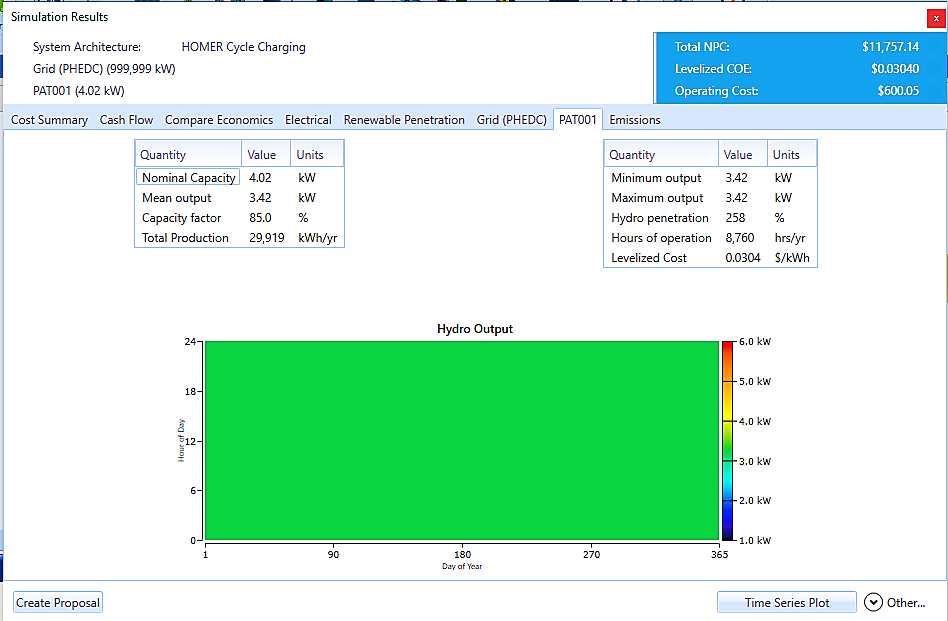
The simulation result shows a positive Net Present Value (NPV) of $11,757.14, indicating a good future value of the project in present times with a Levelized cost of Energy of $0.0304 (N51/kWh) and an annual maintenance cost of $600.
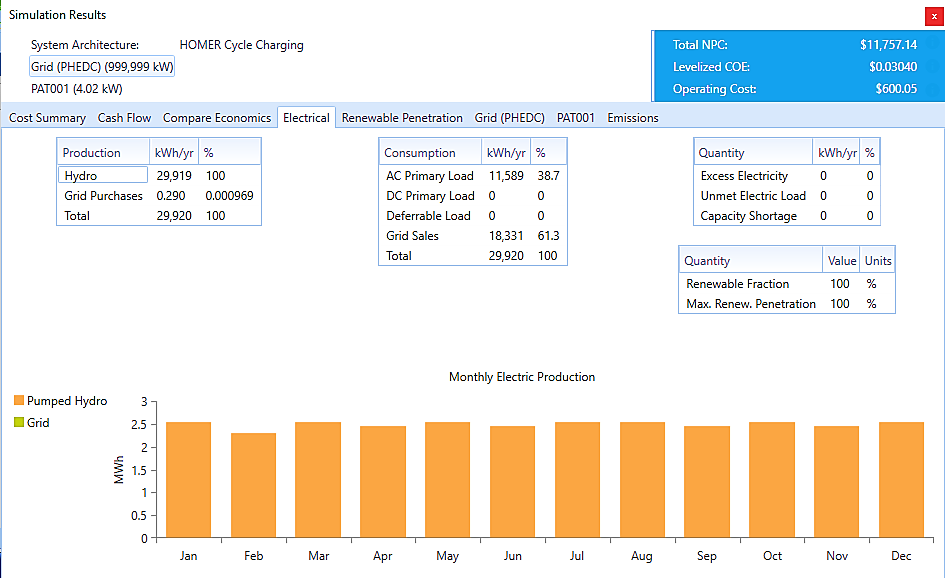
The monthly power generation by the pump energy storage system is presented in Figs. 11 and 12, respectively.
3.5 Monthly Production
4. Conclusion
The research project on the development of a pump model for improving electric power supply at Akwa Ibom State Polytechnic using HOMER technology holds significant potential for addressing the challenges of unreliable power supply and promoting the utilization of renewable energy sources. The project aims to design and implement an optimized pump model that integrates renewable energy generation, efficient energy storage, and reliable power distribution.
Through a comprehensive literature review, it has been established that Akwa Ibom State Polytechnic faces significant challenges in maintaining a reliable power supply, leading to disruptions in academic activities and operational inefficiencies. The availability of abundant renewable energy resources in the region presents an opportunity to leverage clean energy sources for sustainable and reliable power generation. The methodology outlines the key steps involved in the research project, including data collection and analysis, system modeling and simulation using HOMER technology, and pump model design simulation.
These steps provide a systematic framework to guide the project and ensure its successful execution. The expected system results encompass improved power supply reliability, increased utilization of renewable energy, enhanced energy storage efficiency, cost savings, and financial viability. The implementation of the pump model, coupled with the integration of renewable energy sources, is anticipated to yield positive outcomes, benefiting both the academic community and the environment. The research project also highlights the significance of scalability and replicability.
The findings and outcomes of the project would serve as a valuable reference for other educational institutions facing similar power supply challenges. The insights gained from the project would also guide the adoption of similar approaches in different contexts, taking into account local resource availability, regulatory frameworks, and community engagement. The development of a pump model for improving electric power supply at Akwa Ibom State Polytechnic using HOMER technology has the potential to address the power supply issues, promote renewable energy utilization, and contribute to a sustainable and reliable power supply system.
Funding
This research did not receive any specific grant from funding agencies in the public, commercial, or not-for-profit sectors.
Data Availability
The data supporting the findings of this study are available from the corresponding author upon reasonable request.
Conflicts of Interest
The authors declare that there are no conflicts of interest regarding the publication of this paper.
References
- [1] Abu-Rayash, A., & Dincer, I. (2020). Analysis of the electricity demand trends amidst the COVID-19 coronavirus pandemic. Energy research & social science, 68, 101682. https://doi.org/10.1016/j.erss.2020.101682
- [2] Oyewole, S. (2016). Kidnapping for rituals: Article of faith and insecurity in Nigeria. Africology: The journal of pan african studies, 9(9), 35–52. https://B2n.ir/dq5291
- [3] Ibrahim, B., & Mukhtar, J. I. (2017). An analysis of the causes and consequences of kidnapping in Nigeria. African research review, 11(4), 134–143. https://www.ajol.info/index.php/afrrev/article/view/163979
- [4] Obileye, A. A., & George, K. (2021). Trends of kidnapping and hostage taking in 21st century Nigeria: A reflective discourse. CJSMS, 6(1), 114–163. https://B2n.ir/ss2175
- [5] Motjoadi, V., Adetunji, K. E., & Joseph, M. K. (2020). Planning of a sustainable microgrid system using homer software. 2020 conference on information communications technology and society (ICTAS) (pp. 1–5). IEEE. https://doi.org/10.1109/ICTAS47918.2020.233986
- [6] Razmjoo, A., Kaigutha, L. G., Rad, M. A. V., Marzband, M., Davarpanah, A., & Denai, M. (2021). A Technical analysis investigating energy sustainability utilizing reliable renewable energy sources to reduce CO2 emissions in a high potential area. Renewable energy, 164, 46–57. https://doi.org/10.1016/j.renene.2020.09.042
- [7] Mousavi, S. A., Mehrpooya, M., Rad, M. A. V., & Jahangir, M. H. (2021). A new decision-making process by integration of exergy analysis and techno-economic optimization tool for the evaluation of hybrid renewable systems. Sustainable energy technologies and assessments, 45, 101196. https://doi.org/10.1016/j.seta.2021.101196
- [8] Ammari, C., Belatrache, D., Touhami, B., & Makhloufi, S. (2022). Sizing, optimization, control and energy management of hybrid renewable energy system—A review. Energy and built environment, 3(4), 399–411. https://doi.org/10.1016/j.enbenv.2021.04.002
- [9] Dodo, U. A., Ashigwuike, E. C., Gafai, N. B., Eronu, E. M., Sada, A. Y., & Dodo, M. A. (2020). Optimization of an autonomous hybrid power system for an academic institution. European journal of engineering and technology research, 5(10), 1160–1167. ttp://dx.doi.org/10.24018/ejers.2020.5.10.2157
- [10] Arévalo, P., Eras-Almeida, A. A., Cano, A., Jurado, F., & Egido-Aguilera, M. A. (2022). Planning of electrical energy for the Galapagos Islands using different renewable energy technologies. Electric power systems research, 203, 107660. https://doi.org/10.1016/j.epsr.2021.107660
- [11] Mulenga, E., Kabanshi, A., Mupeta, H., Ndiaye, M., Nyirenda, E., & Mulenga, K. (2023). Techno-economic analysis of off-grid PV-Diesel power generation system for rural electrification: A case study of Chilubi district in Zambia. Renewable energy, 203, 601–611. https://doi.org/10.1016/j.renene.2022.12.112
- [12] Elkadeem, M. R., Younes, A., Sharshir, S. W., Campana, P. E., & Wang, S. (2021). Sustainable siting and design optimization of hybrid renewable energy system: A geospatial multi-criteria analysis. Applied energy, 295, 117071. https://doi.org/10.1016/j.apenergy.2021.117071
- [13] Kamal, M. M., Asharaf, I., & Fernandez, E. (2022). Optimal renewable integrated rural energy planning for sustainable energy development. Sustainable energy technologies and assessments, 53, 102581. https://doi.org/10.1016/j.seta.2022.102581
- [14] Ellabban, O., & Alassi, A. (2021). Optimal hybrid microgrid sizing framework for the mining industry with three case studies from Australia. IET renewable power generation, 15(2), 409–423. https://doi.org/10.1049/rpg2.12038
- [15] Bansal, A. K. (2022). Sizing and forecasting techniques in photovoltaic-wind based hybrid renewable energy system: A review. Journal of cleaner production, 369, 133376. https://doi.org/10.1016/j.jclepro.2022.133376
- [16] Khan, A. A., Minai, A. F., Pachauri, R. K., & Malik, H. (2022). Optimal sizing, control, and management strategies for hybrid renewable energy systems: A comprehensive review. Energies, 15(17), 6249. https://doi.org/10.3390/en15176249
- [17] Zebra, E. I. C., van der Windt, H. J., Nhumaio, G., & Faaij, A. P. C. (2021). A review of hybrid renewable energy systems in mini-grids for off-grid electrification in developing countries. Renewable and sustainable energy reviews, 144, 111036. https://doi.org/10.1016/j.rser.2021.111036
- [18] Routray, S. K., Javali, A., Gopal, D., Sharma, L., KP, S., & Sahoo, A. (2021). IoT-based microgrids for rural electrification. 2021 fifth international conference on I-SMAC (IoT in social, mobile, analytics and cloud)(I-SMAC) (pp. 275–279). IEEE. https://doi.org/10.1109/I-SMAC52330.2021.9640770
- [19] Suman, G. K., Guerrero, J. M., & Roy, O. P. (2021). Optimisation of solar/wind/bio-generator/diesel/battery based microgrids for rural areas: A PSO-GWO approach. Sustainable cities and society, 67, 102723. https://doi.org/10.1016/j.scs.2021.102723
- [20] Zhang, L., Li, S., Nie, Q., & Hu, Y. (2022). A two-stage benefit optimization and multi-participant benefit-sharing strategy for hybrid renewable energy systems in rural areas under carbon trading. Renewable energy, 189, 744–761. https://doi.org/10.1016/j.renene.2022.03.048
- [21] Deele, L. B., Ozuomba, S., & Okpura, N. (2019). Design and parametric analysis of a stand-alone solar-hydro power plant with pumped water storage technology. International journal of engineering & technology (IJET), 4(1), 9-23. 10.5281/zenodo.3534415