
Smart Urban Water Management: Integrating AI and IoT for Optimization and Waste Reduction
Abstract
The management of water resources is becoming more intricate as urban areas grow and the demand for water increases. This study examines how the combination of Artificial Intelligence (AI) and Internet of Things (IoT) technologies can deliver innovative solutions for smart city water management. IoT devices facilitate the real-time monitoring of water systems, whereas AI aids in analyzing extensive data for tasks such as predictive maintenance, leak detection, and demand forecasting. By enhancing water distribution efficiency and reducing waste, AI and IoT present groundbreaking opportunities in urban water resource management. The study outlines the technical frameworks, primary applications, challenges, and future prospects of AI and IoT within this domain.
Keywords:AIIoTsmart citieswater resource managementpredictive analyticsreal-time monitoringurban
infrastructure.
1. Introduction
As cities worldwide grow in population and infrastructure, the pressure on water resources intensifies, driving the need for sustainable and efficient water management practices. Water scarcity is one of the most significant global challenges today, exacerbated by climate change, rapid urbanization, and an increasing demand for water in domestic and industrial applications. Traditional water management systems often fail to address these challenges due to their reactive nature, where leaks, contamination, and excessive usage are only detected and managed after they occur. This approach results in substantial water losses, high operational costs, and an unsustainable environmental impact.
In recent years, cities have begun transitioning into "smart cities" that utilize advanced technology to improve the quality of urban life, optimize resource use, and enhance the efficiency of infrastructure systems. Water resource management is crucial to this transition, requiring innovative solutions to ensure a reliable, safe, and efficient water supply. AI and IoT technologies offer promising solutions, enabling proactive, data-driven management of urban water resources. Through continuous monitoring, predictive analytics, and intelligent automation, these technologies can help cities optimize water distribution, conserve resources, and ensure sustainability [1].
AI and IoT play distinct but complementary roles in smart water management. IoT involves deploying sensors throughout the water infrastructure—such as at pipelines, treatment facilities, reservoirs, and even consumer endpoints—to monitor critical metrics like flow rate, pressure, and quality in real time. These sensors communicate via Low-Power, Wide-Area Networks (LPWAN) such as LoRa, NB-IoT, or LTE-M, which are well-suited for large-scale urban applications. The continuous stream of data generated by IoT sensors allows for granular monitoring and provides a basis for understanding the overall health of the water distribution network.
AI technologies, including machine learning and deep learning algorithms, analyze this extensive data, identifying patterns and predicting potential issues before they become severe. For example, AI algorithms can detect leaks by analyzing sudden drops in pressure or unusual flow patterns, enabling cities to address the issue promptly and prevent significant water losses. Similarly, AI-driven predictive maintenance can forecast equipment failure by assessing historical and real-time data on the operational conditions of pumps, valves, and pipelines. This proactive approach reduces downtime, lowers maintenance costs, and extends the lifespan of water infrastructure [2].
The integration of AI and IoT in water management brings numerous benefits:
I. Enhanced Efficiency: Real-time data from IoT sensors enables water utilities to monitor usage patterns continuously, allowing them to balance supply and demand more effectively. With AI analyzing this data, utilities can optimize water distribution routes, conserve resources, and minimize operational costs. II. Improved Water Quality and Safety: IoT sensors can continuously monitor water quality indicators such as pH, turbidity, and contaminant levels. AI models can then analyze these indicators to detect anomalies, ensuring contamination is identified and addressed immediately, thereby protecting public health.
III. Resource Conservation: AI and IoT can significantly reduce water wastage by detecting leaks early and optimizing water distribution based on demand forecasts. For instance, predictive models can help regulate water flow based on weather patterns, reducing the strain on resources during peak demand and conserving water during periods of low usage.
IV. Data-Driven Decision-Making: With a continuous data stream, city water authorities can make informed decisions based on real-time conditions and historical trends. Predictive analytics enables authorities to anticipate demand fluctuations, optimize resource allocation, and make investment decisions based on actual needs.
V. Climate Resilience: As climate change introduces more extreme weather conditions, AI models can help cities prepare by analyzing historical weather data and forecasting potential impacts on water demand and supply. This ability to adapt to changing conditions is critical for ensuring water availability during droughts or floods.
VI. Public Engagement and Transparency: Smart water systems equipped with IoT sensors provide data that can be shared with the public through online platforms or mobile applications. This transparency allows citizens to monitor their water usage, adopt more sustainable practices, and stay informed about the city's water conservation efforts.
This paper explores AI and IoT's technical framework and applications in smart city water management, highlighting their role in improving efficiency, sustainability, and resilience. By examining case studies and potential challenges, this study sheds light on how these technologies can help transform urban water management and create more sustainable and resilient cities. Integrating AI and IoT in water systems represents a fundamental shift from reactive to proactive management, paving the way for smart cities to meet modern urban populations' demands better [3].
2. Technologies and Frameworks
2.1 IoT for Water Resource Management
The IoT framework for water management involves using various sensors that collect data on parameters such as water flow, pressure, quality, and consumption patterns. These sensors are connected via communication networks such as LoRa, NB-IoT, or LTE-M, specifically designed for LPWAN. The collected data is transmitted to cloud servers and processed and analyzed for actionable insights.
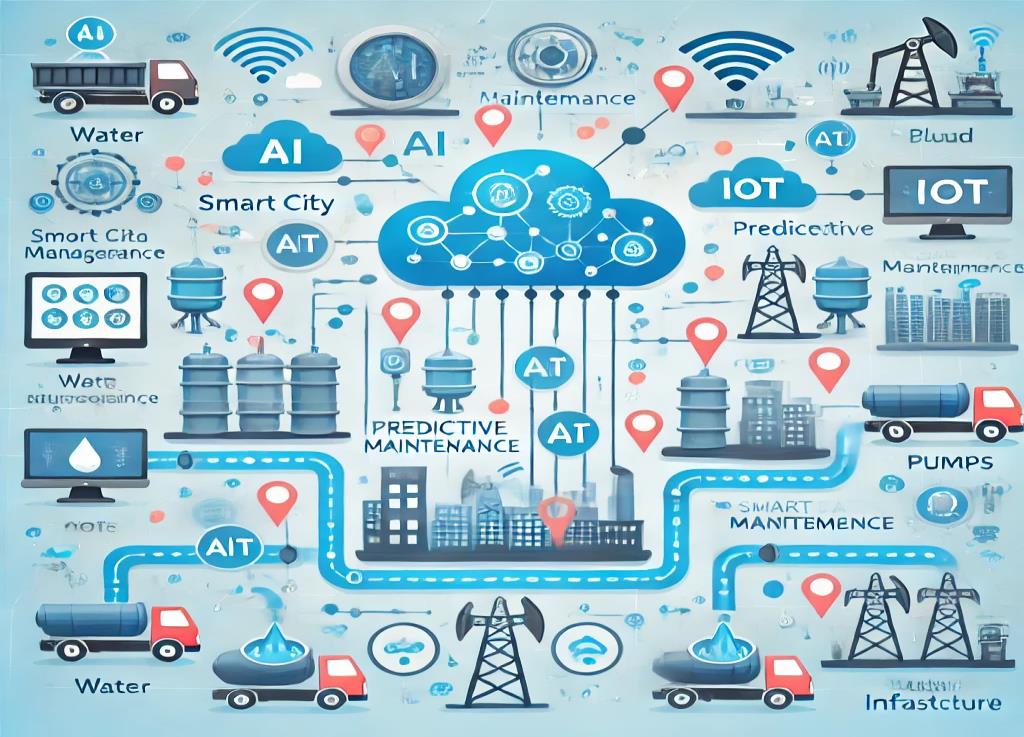
IoT sensors are deployed in smart city water grids at critical points such as reservoirs, pipelines, and consumer endpoints. These sensors provide real-time data, allowing operators to monitor water distribution systems remotely. For example, pressure sensors can detect leaks in the system, while flow meters can provide insights into unusual consumption patterns, potentially signaling water theft or system inefficiencies [4].
2.2 AI in Water Resource Management
AI plays a pivotal role in turning raw IoT data into meaningful insights. Machine learning algorithms can analyze historical data and predict future water consumption, enabling better resource planning. AI models can also identify patterns in sensor data that may indicate system failures, such as leaks, equipment malfunctions, or abnormal consumption [5].
In predictive maintenance, AI algorithms analyze the operational data of water pumps, valves, and pipes to predict when they will likely fail, thus allowing for maintenance before a breakdown occurs. This reduces downtime and prevents catastrophic failures. Furthermore, AI-based demand forecasting helps adjust water distribution based on real-time and predicted usage, ensuring water is delivered efficiently without wastage.
3. Applications of AI and IoT in Smart Cities
3.1 Leak Detection and Prevention
One of the most critical applications of IoT in water management is leak detection. Studies have shown that leaks in water distribution networks can result in a loss of up to 30% of the total water supply in some cities. Smart sensors installed throughout the water distribution network continuously monitor the system for pressure drops or unusual flow rates, which may indicate a leak. AI algorithms then process this data to quickly identify the leak's location, allowing maintenance teams to address the issue before significant water loss occurs.
3.2 Predictive Maintenance
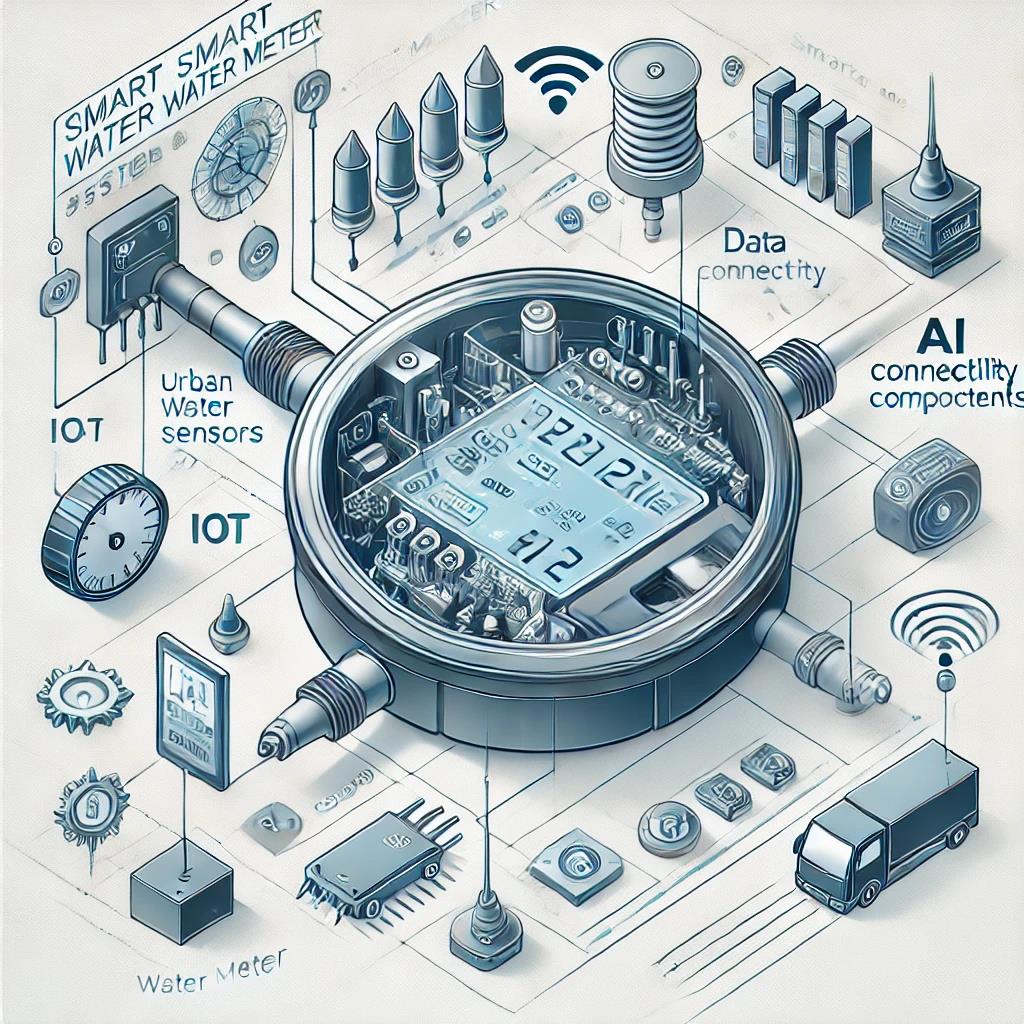
AI-driven predictive maintenance is another critical application. By continuously monitoring the health of water infrastructure components such as pumps, valves, and pipelines, AI algorithms can predict when equipment is likely to fail. This enables cities to perform maintenance operations proactively, reducing downtime and repair costs. For example, pump vibration sensors can detect early signs of wear, and AI models can predict when the pump will require servicing [6].
3.3 Demand Forecasting and Optimization
Water demand can fluctuate significantly depending on weather conditions, population growth, and industrial activities. AI-based demand forecasting algorithms analyze historical usage data, current consumption patterns, and external factors like weather forecasts to predict future water demand. This allows city water managers to adjust supply in real-time, ensuring enough water is available when needed while avoiding over-distribution. This could lead to wastage or lower consumer pressure in other parts of the network [7].
3.4 Smart Irrigation Systems
In cities, water management is not only about supplying households but also about maintaining green spaces. AI and IoT have found applications in smart irrigation systems, where sensors monitor soil moisture, weather forecasts, and water availability to optimize irrigation schedules. This ensures that plants receive adequate water without over-irrigation, reducing water waste in public parks and gardens.
4. Case Studies
4.1 Barcelona’s Smart Water Management System
Barcelona is one of the leading cities in adopting AI and IoT for water resource management. The city has implemented a smart water management system integrating IoT sensors and AI algorithms to monitor and manage its water distribution network. These sensors provide real-time data on water flow, pressure, and quality. AI models analyze the data to predict demand and detect potential leaks. Since implementing this system, Barcelona has reduced its water loss by 15%, saving millions of euros annually [8].
4.2 Singapore’s Intelligent Water System
Singapore’s Public Utilities Board (PUB) has implemented an intelligent water management system that uses AI and IoT to manage its water supply. The system includes sensors that monitor water quality, pressure, and flow throughout the distribution network. AI models analyze the data to detect leaks, predict maintenance needs, and optimize water distribution based on demand. The system has significantly reduced water loss and improved the city's efficiency of water resource management.
4.3 Los Angeles: Water Recycling and IoT
Los Angeles has pioneered smart water recycling systems that use IoT and AI technologies to monitor recycled water quality. Sensors track water quality at various stages of the recycling process, and AI models ensure that the recycled water meets safety and quality standards. This allows the city to recycle a significant portion of its wastewater for reuse in landscaping and industrial processes, reducing its reliance on imported water [9].
5. Challenges and Limitations
5.1 Data Privacy and Security
IoT systems collect vast amounts of data, raising concerns about privacy and security. Water consumption data can reveal sensitive information about individual behaviors, and if not adequately secured, it could be accessed by unauthorized parties. Secure communication between IoT devices and cloud systems is critical to protecting user privacy and maintaining trust in smart water management systems.
5.2 High Implementation Costs
Deploying IoT devices, AI platforms, and supporting infrastructure can be expensive, especially for large-scale implementations in smart cities. High initial costs are often a barrier to adoption, particularly in developing countries or cities with limited budgets. However, the long-term savings in water conservation and reduced operational costs can outweigh the initial investments [10].
5.3 Interoperability Challenges
Smart water systems often involve integrating hardware and software from different vendors. Ensuring these systems can communicate and work together seamlessly is a major challenge. Lack of standardization in IoT devices and protocols can lead to compatibility issues, making implementing a unified water management system difficult.
5.4 Maintenance of IoT Devices
While IoT devices offer real-time monitoring and control, they require regular maintenance. Sensors may malfunction or run out of battery power, disrupting the entire water management system. Ensuring that IoT devices are regularly maintained and updated is critical to the success of innovative water management projects.
6. Future Directions
6.1 Integration of 5G and Edge Computing
The deployment of 5G networks will significantly enhance the capabilities of IoT devices by providing faster data transmission speeds and lower latency. This will enable real-time monitoring and control of water systems with minimal delays. Edge computing, where data is processed closer to the source (i.e., at the sensor level), will also improve the efficiency of smart water systems by reducing the need for data to be transmitted to centralized cloud servers [11].
6.2 AI-Driven Water Conservation Strategies
Future smart water systems could leverage AI to manage water distribution and promote conservation. AI models could analyze consumption patterns and provide personalized recommendations to consumers on reducing water usage. Additionally, AI could be used to optimize water pricing models, encouraging conservation through dynamic pricing based on consumption levels.
6.3 Blockchain for Secure Water Management
Blockchain technology could be used to ensure the security and transparency of data in smart water management systems. By creating an immutable record of water consumption data, blockchain can prevent tampering and ensure that all data is accurately recorded and reported. This could be particularly useful in managing water resources in regions where disputes over water usage are common.
7. Environmental Impact and Sustainability
7.1 Reduction in Water Waste through AI-Driven Leak Detection
Incorporating AI and IoT into water management systems has dramatically enhanced leak detection capabilities, allowing for immediate identification and repair of leaks that would go unnoticed for prolonged periods. With continuous monitoring and real-time reporting, smart water systems can detect leaks as soon as they appear, ensuring quick repair and minimizing waste. This reduction in water waste translates directly into a decrease in the energy required to pump, treat, and deliver water, reducing the overall environmental footprint of the urban water supply system.
7.2 Sustainable Water Reuse and Recycling through Real-Time Quality Monitoring
IoT sensors deployed in wastewater treatment facilities can continuously monitor and assess water quality, enabling safe recycling and reuse. Real-time quality monitoring ensures that treated wastewater is reused efficiently for irrigation, industrial processing, and groundwater replenishment. AI analytics help identify patterns in water quality data, allowing for timely adjustments in treatment processes to maintain high standards and contributing to sustainable water resource management.
7.3 Enhancing Climate Resilience through Predictive Modeling
With the rise in unpredictable weather patterns due to climate change, smart water systems can be instrumental in ensuring climate resilience for urban water supplies. AI-driven predictive models can analyze historical weather data, current climate trends, and usage patterns to forecast water demand during extreme conditions, such as droughts or floods. Cities can use these predictions to allocate resources, reinforce vulnerable infrastructure, and create responsive strategies for climate resilience, ensuring water availability even during environmental crises.
8. Social and Economic Benefits of AI and IoT in Water Management
8.1 Enhanced Accessibility to Safe Water in Underserved Communities
Incorporating AI and IoT into water management provides underserved areas better access to safe and affordable water. By optimizing the distribution network, cities can improve service to remote or economically challenged neighborhoods, ensuring they receive a fair share of the water supply. Real-time monitoring also helps cities quickly respond to any service disruptions, maintaining equitable access across urban areas.
8.2 Reducing Operational Costs for Municipal Water Utilities
AI-powered predictive maintenance and efficient resource allocation can lead to significant cost savings for municipal water utilities. By predicting failures and scheduling preventive maintenance, cities reduce costly emergency repairs and extend the lifespan of water infrastructure. In addition, real-time demand forecasting allows for optimized water treatment and pumping schedules, reducing energy use and operating costs. These savings can be reinvested in infrastructure upgrades, benefiting the municipality and its residents.
8.3 Promoting Community Engagement and Awareness through Transparent Data
AI and IoT technologies offer an opportunity to engage the public in water conservation efforts. Cities can encourage more mindful water usage by providing citizens with tools to monitor their own water consumption and understand broader city water use patterns. Educational campaigns, supported by data insights from smart water meters, can empower citizens to adopt sustainable practices, creating a more water-conscious community and fostering a collaborative approach to urban water management.
9. Integration with Other Smart City Systems for Synergistic Benefits
9.1 Creating a Water-Energy Nexus for Resource Optimization
AI and IoT systems in water management can be synchronized with energy management networks, allowing cities to optimize both resources simultaneously. Water pumping and treatment operations are energy-intensive; therefore, cities can conserve energy and reduce costs by aligning water distribution schedules with periods of lower energy demand. The integrated management of water and energy systems can also improve sustainability outcomes by lowering greenhouse gas emissions from energy use in water infrastructure.
9.2 Supporting Smart Urban Agriculture with Precision Irrigation
Incorporating AI and IoT into water management enables the deployment of precision irrigation systems for urban agriculture, community gardens, and green spaces. IoT sensors can monitor soil moisture, plant health, and weather conditions in real time, adjusting water delivery based on immediate needs. By providing plants with precisely the amount of water they require, cities conserve water while supporting sustainable urban agriculture, which enhances food security and reduces the carbon footprint associated with food transport.
9.3 Coordinating with Traffic Management for Efficient Infrastructure Maintenance
Integrating smart water systems with city traffic management can minimize disruptions caused by maintenance work. AI models can analyze traffic patterns and infrastructure health data to schedule repairs during off-peak hours, reducing traffic congestion and public inconvenience. Coordinated scheduling also prevents delays in maintenance work, improving the water system's efficiency and enhancing overall urban mobility.
10. Conclusion
Integrating AI and IoT in water resource management offers cities a powerful toolset for addressing the growing challenges of urban water scarcity and inefficiency. By enabling real-time monitoring, predictive analytics, and optimization of water distribution, these technologies can help cities become more resilient and sustainable. While there are challenges related to data privacy, security, and cost, the potential benefits of smart water systems far outweigh the risks. As AI and IoT technologies evolve, we expect to see even more innovative applications in water resource management.
Funding
This research received no external funding.
Data Availability
The data used in this study are available upon reasonable request from the corresponding author.
Conflicts of Interest
The authors declare no conflicts of interest.
References
- [1] Pradeep, K., & Jacob, T. P. (2016). Comparative analysis of scheduling and load balancing algorithms in cloud environment. 2016 international conference on control, instrumentation, communication and computational technologies (ICCICCT) (pp. 526-531). IEEE. https://doi.org/10.1109/ICCICCT.2016.7988007
- [2] Aslam, S., & Shah, M. A. (2015). Load balancing algorithms in cloud computing: a survey of modern techniques. 2015 national software engineering conference (NSEC) (pp. 30-35). IEEE. https://doi.org/10.1109/NSEC.2015.7396341
- [3] Alkhatib, A. A., Alsabbagh, A., Maraqa, R., & Alzubi, S. (2021). Load balancing techniques in cloud computing: Extensive review. Advances in science, technology and engineering systems journal, 6(2), 860-870. https://www.researchgate.net
- [4] Mohapatra, H., & Rath, A. K. (2019). Detection and avoidance of water loss through municipality taps in India by using smart taps and ICT. IET wireless sensor systems, 9(6), 447–457. https://doi.org/10.1049/iet-wss.2019.0081
- [5] Sun, A. Y., & Scanlon, B. R. (2019). How can Big Data and machine learning benefit environment and water management: a survey of methods, applications, and future directions. Environmental research letters, 14(7), 73001. https://doi.org/10.1088/1748-9326/ab1b7d
- [6] Gadde, H. (2021). AI-driven predictive maintenance in relational database systems. International journal of machine learning research in cybersecurity and artificial intelligence, 12(1), 386–409. https://www.academia.edu/download/119017293/386_409_ijmlrcai_2021.pdf
- [7] Chang, H., Praskievicz, S., & Parandvash, H. (2014). Sensitivity of urban water consumption to weather and climate variability at multiple temporal scales: The case of Portland, Oregon. International journal of geospatial and environmental research, 1(1), 7. https://dc.uwm.edu/ijger/vol1/iss1/7/
- [8] Mohapatra, H., & Rath, A. K. (2021). An IoT based efficient multi-objective real-time smart parking system. International journal of sensor networks, 37(4), 219–232. https://doi.org/10.1504/IJSNET.2021.119483
- [9] Joshi, D., Gholami, H., Mohapatra, H., Ali, A., Streimikiene, D., Satpathy, S. K., & Yadav, A. (2022). The application of stochastic mine production scheduling in the presence of geological uncertainty. Sustainability, 14(16), 9819. https://doi.org/10.3390/su14169819
- [10] Wolniak, R., & Stecuła, K. (2024). Artificial Intelligence in Smart Cities—Applications, Barriers, and Future Directions: A Review. Smart cities, 7(3), 1346–1389. https://doi.org/10.3390/smartcities7030057
- [11] Munier, F., Xiong, Z., Shreevastav, R., Jiang, X., Lyazidi, Y., Shrestha, D., … others. (2024). Positioning of RedCap devices in 5G networks. IEEE communications magazine, 62(8), 110–116. https://doi.org/10.1109/MCOM.001.2300802