
A Comparative Study of MCDM Approaches: Exploring the Influence of Additional Parameters in Mathematics
Abstract
This article introduces a Multi-Criteria decision-making approach that utilizes a scoring function within a bipolar fuzzy framework. TOPSIS is one of the most effective techniques for identifying the best solution. To achieve this, we examined the TOPSIS method along with bipolar fuzzy arithmetic and geometric weighted aggregators. Subsequently, we developed the new methodology by incorporating the bipolar score function. Also, we would like to compare the proposed method with the traditional TOPSIS approach. A comparative analysis was performed to illustrate the effectiveness and applicability of the suggested techniques. We also applied the new methodology to a Multi-Criteria Decision-Making problem. Moreover, we included the regression results using the bipolar scoring function to evaluate the influence of other parameters in mathematics.
Keywords:TOPSIS methodBipolar fuzzy setScore functionDecision making
1. Introduction
Decision Support Systems are advanced technologies that facilitate decision-making in complex environments by offering structured analysis and data-driven choices (Mahmood, 2016) [1]. As a result, these systems are becoming crucial in various disciplines, including corporate strategy, health, and well-being. In an attempt to achieve a resolution, several tools and decision-making systems were integrated, but none of them was able to adequately illustrate the complexity of problem. New theories are now being used by researchers as mathematical instruments for decision assistance and decision-making systems. Mathematical and analytical models are used in model management system (MMS) to interpret data and make choices. Mathematical models are instruments for improving decision-making systems because they contain specialized information or principles to help decision-making, such as fuzzy set theory [2] (Zadeh 1965), rough set theory [3] (Pawlak 1982), and soft set theory [4] (Molodtsov 1999). Analytical models (AM) are mathematical representations employed to analyze the data, interpret it, and predict the behavior of the process, or decision-making system. AM uses mathematical formulas, statistical techniques, or algorithms to examine input data and provide output insights, assisting in decision-making, aiding in understanding correlations between variables, and forecasting outcomes using various analytical tools like EXCEL, SPSS, MATLAB, R, and Python.
The process of decision-making (DM) entails selecting the optimal choice among feasible options, preferences and available data. Many fields, including business statistics, health, applied mathematics, and economics, employ MCDM. Zadeh (1965) [2] pioneered the concept of fuzzy set theory to deal with vague data. In 1970, Bellman and Zadeh [5] initially introduced fuzzy set theory, which has applications in decision-making. Many researchers have been attempting to solve decision-making issues by utilizing fuzzy set theory. ’Decision making and problem solving are distinct processes, where problem-solving requiring finding a solution while decision making requires making a choice’ says Michael J. Marx.
In order to solve a decision making problem Hwang and Yoon (1981) [6] constructed Technique for order preference by similarity to an ideal solution (TOPSIS), a multi-criteria decision-making (MCDM) technique that seeks to identify the optimal option among acceptable possibilities. According to the TOPSIS principle, the alternative should be positioned as close to the positive ideal solution, and as far away from the negative ideal solution as possible [11]. The TOPSIS technique has been expanded by many researchers to work in fuzzy contexts, leading to applications in multi-criteria fuzzy decision-making. Triantaphyllou and Lin (1996)[7] used fuzzy arithmetic operations to create a fuzzy version of the TOPSIS technique, which produced fuzzy relative closeness for every decision. By defining, Euclidean distance between fuzzy numbers Chen(2000) [8] widened the TOPSIS technique to fuzzy group decision-making scenarios substantially with the rating value of each alternative and weight of each criterion. Tsaur et al. (2002)[9] used the centroid method which is one of the defuzzification methods to transform a fuzzified MCDM problem into a crisp one, and solved the non fuzzified multi criteria issue by using the TOPSIS technique. Many researchers applied the TOPSIS technique in various fields (Hung, 2009) [40], (Zhi-yong Bai, 2013)[11], (Akram, 2020) [10]. Further, the TOPSIS method was extended by Jahanshahloo et al. (2006) [12],(Li, 2011) [42], (Joshi, 2014) [41], Dincer (2015) [35], Han (2018) [36], Akram (2019) [34], Sindhu (2021) [33], to handle fuzzy data, achieving a high accuracy rate when dealing with numerical values.
On the other hand, a score-valued function is frequently used in fuzzy set theory to measure a fuzzy set’s total value or membership degree. When working with ambiguous or imprecise data, a score function in fuzzy sets is a useful tool for aggregating fuzzy numbers into a single indicative value for ranking or assessment. The score functions are often used in fuzzy multi-criteria decision-making (FMCDM), which uses fuzzy criteria. The selection of scoring function might have an impact on the result, various score functions may provide different ranks for the same fuzzy data.
However, decision-making data often involves both linguistic variables and numerical data, and some information exhibits bipolarity, with both positive and negative values that must be considered [14] (Nathinee Deetae, 2021). In mathematics, bipolar values refer to quantities that can take two distinct forms, one positive and one negative; these values may also represent conflicting or opposing ideologies, often positioned at opposite ends of a spectrum. Bipolar values are crucial in decision-making, especially when addressing contrasting or opposing perspectives. By recognizing opposing values, decision-makers can weigh the pros and cons, leading to more informed and equitable decisions. Bipolar values dynamically foster creativity and innovation, ensuring the decision-making accounts for diverse factors and conflicting interests, enabling more holistic and responsible outcomes.
In 1994, Zhang [16] introduced the bipolar fuzzy set, often known as bipolar fuzzy logic, which has been extensively used to address pragmatic problems. In 1998, the concepts of bipolar fuzziness and interval-based bipolar fuzzy logic were established by Zhang [13]. Numerous researchers developed the concepts of Bipolar fuzzy set theory and applied it in various domains [15], [10] [27] [31], [38] [32],[22], [37], [21]. [0, 1] and [-1, 0] are two extremes that represent the membership degree range of bipolar fuzzy sets: 0 denotes irrelevant elements and (0, 1], [-1, 0] denotes partial fulfillment. In 2008, The significance of bipolarity in human cognition and emotional selection was addressed by Da Silva Neves et al. [?]. In 2018, MCDM techniques in a bipolar fuzzy environment were presented by Alghamdi M. A. et al. [15]. Bipolar fuzzy TOPSIS and bipolar fuzzy ELECTRE-I algorithms were offered by Muhammad Akram et al. in 2020 [10]. Many researchers developed different scoring value for bipolar function [1], [37]. Additionally, various researchers applied these scoring functions in MCDM problems [1], [18], [19], [11]. The BFS-TOPSIS approach to MCDM problem-solving was put into practice by Nathinee Deetae [14] in 2022.
By incorporating BF concepts into set theory and bipolar logical reasoning in 2004, Zhang and Zhang [20] strengthened the FS. In 2015, the notion of bipolar fuzzy aggregation operators was first presented by Gul [21]. The bipolar fuzzy weighted arithmetic (BFWA) operator, and the bipolar fuzzy weighted geometric (BFWG) operator are two key operators designed within this paradigm [22]. The hesitant bipolar fuzzy weighted averaging and geometric operators were initially proposed by Wei et al. [23] in 2017. Hamacher aggregation operator was described by Xu and Wei [37]. Dombi aggregation operator was introduced by Jana [22] in 2019 and are intended for BFS. These operators are employed to create solutions for problems involving multi-attribute group decision-making. Following their research, Jan et al. [24] created a hybrid decision-making framework in bipolar complex pictures fuzzy soft sets. Mani et al. (2023) [25] suggested the concept of intuitionistic fuzzy bipolar metric spaces. In 2024, Dilshad Alghazzawi et al.,[26] introduced the dynamic aggregator operators in bipolar fuzzy environment.
1.1 Contribution of this Research
The contribution of this study focuses on:
1. Illustrating the TOPSIS in various bipolar aggregators framework.
2. Presenting a simplified ranking method using a score function in an uncertain bipolar environment.
3.Providing a comprehensive and efficient decision-making process through a straightforward and less computations.
4. Raising the importance of score function over distance measures.
5. Verifies the robustness and practicability of the suggested technique through comparative studies.
6. Illustrates the effectiveness of bipolar score function in analyzing statistical results.
1.2 Objective of this Research
The aim of this article is to prove that the bipolar score function has the ability to produce the optimal solution in MCDM with the simple procedure. Our motivation is to show that this simple method in MCDM has never been established before. However, it generates results similar to TOPSIS and effectively handles statistical
results.
1.3 Motivation of this Research
The main goals of this work are to compare various bipolar aggregation operators in the TOPSIS method and to develop a new approach based on the bipolar score function that produces the same optimal result. The following are primary reason for implementing this investigation:
1. The recommended method saves time and offers remarkable flexibility in managing ambiguous data. 2. Since the TOPSIS method is one of the traditional approaches for resolving MCDM, the recommended technique’s best solution is expected to coincide with the TOPSIS method.
3. The bipolar fuzzy set reflects both the positive and negative effects of the decision. The best possible solution may be shown clearly by utilizing the bipolar score function in MCDM.
1.4 Research gap
Previous studies have focused on decision making in MCDM and MADM problems using various approaches like TOPSIS, COPRAS, and VIKOR. These methods have complex computations and involve positive ideal, negative ideal solution, closeness ratio, and distance measures to obtain the solution. The most classical TOPSIS method provides the finest solutions for the decision-making problem. However, many researchers have presented techniques that do not match the TOPSIS method result. The bipolar fuzzy set describes both positive and negative aspects of the problem. So, it is crucial to solve the decision-making problems in bipolar environments using a simple and effective approach that ensures the finest result. The proposed decision-making strategy has the potential to address this research gap.
1.5 Flow of the Research
The basic definitions for the study are presented in Section 2. Section 3 discusses the TOPSIS approach using the framework of bipolar weighted and geometric aggregators. Section 4 introduces a novel strategy using bipolar scoring functions, and compares it with other TOPSIS extensions. Section 5 provides a comparative study, outlining the benefits and drawbacks of the proposed methodology. Section 6 illustrates the utilization of the bipolar scoring function in statistical analysis to evaluate the influence of other parameters in mathematics. The conclusion outlines the potential for future investigation and the scope of upcoming work.
2. Preliminaries
Definition 1. [Bipolar fuzzy sets [13] Zhang, 2016] Let X be the non-empty fuzzy set. The bipolar fuzzy set
− + + −
B = {B , B } is defined in X. B ∈ [ 0, 1] is the satisfaction degree of x in B, B ∈ [ −1, 0] is the satisfaction degree of the implicit counter property of x in B.
Definition 2. [Operations on Bipolar fuzzy sets:][29] Consider B1, B2 ∈ BFS. Zhang defines the following
operations.
− − + +
i) Disjunction : B1 + B2 = (−max[b1 , b2 ], max[b1 , b2 ])
− − + +
= (−[b1 ∨ b2 ], [b1 ∨ b2 ])
− − + +
ii) Parallel conjuction: B1.B2 = (−min[b1 , b2 ], min[b1 , b2 ])
− − + +
= (−[b1 ∧ b2 ], [b1 ∧ b2 ])
− + + − − − + +
iii) Serial conjuction: B1 × B2 = (−{[b1 ∧ b2 ] ∨ [b1 ∧ b2 ]}, {[b1 ∧ b2 ] ∨ [b1 ∧ b2 ]}) iv) Negation: −B1 = [−b1 , b1 ] v) Complement: ¬B1 = ¬[−1 + b1 , 1 − b1 ] Definition 3. [Score function] Wei et al. [37]defined the score function S(B) of B = (b , b ) ∈ BFS as:
1 + b + b S(B) =
S(B) ∈ [0, 1].
′ − +
Definition 4. (Score Function) T. Mahmood et al. [1] defined the score function as S (B) of B = (b , b )
∈ BFS as:
′ + −
S (B) = b + b
′ + − ′
where S (B) ∈ [−1, 1], and if b = b =⇒ S (B) = 0
Definition 5. (Measures of distance)[28] Consider f1 and f2 are two fuzzy sets. The distance measure
between f1 and f2 sets are defined as:
pP i) Euclidean Distance: de(f1, f2) = (µf (xk) − µf (xk))
k=1 1 2
Pn ii) Normalized Euclidean Distance: dne(f1, f2) = (µf (xk) − µf (xk))
n k=1 1 2
Definition 6. (Bipolar weighted Arithmetic operator (BWAO))[22] The bipolar weighted arithmetic operator
(BWAO) for the alternative βj(j = 1, 2, ..., n) is described as
+ wj − wj
BW AO(β1, β2, ..., βn) = (1 − (1 − B )(x)) , − (B (x) ),
Pn where wj ∈ [0, 1] is the weight of βj and wj = 1.
Definition 7. [Bipolar weighted geometric operator (BWGO)] [22] The bipolar weighted geometric operator
(BWGO) for the alternative βj(j = 1, 2, ..., n) is described as
+ wj − wj
BW GO(β1, β2, ..., βn) = ((1 − B )(x)) , −1 + (1 − (B (x) )),
Pn where wj ∈ [0, 1] is the weight of βj and wj = 1.
3. TOPSIS METHOD
3.1 Algorithm
Let T = {t1, t2, · · · , tn} and s = {s1, s2, · · · , sm} denotes the set of alternatives and criteria respectively. In 2018, M. A. Alghamdi et al.proposed the following TOPSIS approach [15].
Step 1: Prepare the DM Cpq = (apq, bpq)of the given information using the bipolar fuzzy set.
Step 2: Calculate the weighted DM using the weights ωi of each criterion.
Step 3: Compute the BFPIS and BFNIS, by [15]
+ + + + + + T
BFPIS = [(α1 , β1 ), (α2 , β2 ), · · · , [(αm, βm)]
− − − − − − T
BFNIS == [(α1 , β1 ), (α2 , β2 ), · · · , [(αm, βm)] + − + −
where αq = maxp[apq], αj = minp[apq], βq = maxp[bpq], αj = minp[bpq].
Step 4: Now, calculate the ED between each alternative from BFPIS and BFNIS [15]
u X m + 2 + 2
ED(ti, BF P IS) = t (apq − αq ) + (bpq − βq ) 2 q=1
u X m − 2 − 2
ED(ti, BF N IS) = t (apq − αq ) + (bpq − βq ) 2 q=1
Step 5: Calculate the closeness ratio [15]
ED(ti, BFNIS)
cri =
ED(ti, BFPIS) + ED(ti, BFNIS)
Step 6: Arrange and rank the ti where the greatest value of cri gives the most desirable solution.
3.2 Algorithm
Follow, Step 1 as it is in TOPSIS method.
Step WA2: Calculate the BWAO DM using definition (6).
Step WA3: Compute the BFPIS and BFNIS as in Algorithm 1.
Step WA4: Calculate the ED between each alternative from BFPIS and BFNIS as in Algorithm 1.
Step WA5: Calculate the closeness ratio.
Step WA6: Arrange and rank the ti where the greatest value of cri gives the most desirable solution.
3.3 Algorithm
Follow, Step 1 as it is in TOPSIS method.
Step GA2: Calculate the BGAO DM using definition (7).
Step GA3: Compute the BFPIS and BFNIS as in Algorithm 1.
Step GA4: Calculate the ED between each alternative from BFPIS and BFNIS as in Algorithm 1.
Step GA5: Calculate the closeness ratio.
Step GA6: Arrange and rank the ti where the greatest value of cri gives the most desirable solution.
3.4 Illustrative Example
In this section, a real-life multi-criteria decision-making instance is utilized to illustrate the proposed technique with the score function. Assume that a company intends to use an enterprise resource planning (ERP) system
(discussed by Wang (2006), Alghazzawi, (2024)[30], [26]). The initial work is to form a project team including
the CIO with two senior members from user departments by gathering all relevant data on ERP suppliers and
systems. Five possible ERP systems ESi(i = 1, 2, 3, 4) are selected as candidates by the project team.
The business consults with a few external consultants to assess this decision-making. Function and technology
(δ1), Strategic fitness (δ2), Vendor capability (δ3), and Reputation (δ4) are the criteria chosen by the project team. It is necessary to assess four potential ERP systems ESi(i = 1, 2, 3, 4) using the bipolar fuzzy numbers. ω = (0.27, 0.25, 0.18, 0.3) is the weight of four characteristics vector.
To select the most desirable ERP systems [26], we utilize the most classical TOPSIS approach with bipolar
fuzzy information.
Table 1. The normalized decision matrix of BFS.
This table is shown in the PDF version of the article.
ES1 (-0.7, 0.55) ( -0.3, 0.75) (-0.2, 0.9) (-0.7, 0.8) ES2 (-0.6, 0.65) ( -0.1, 0.5) (-0.7, 0.6) (-0.3, 0.45) ES3 (-0.3, 0.75) ( -0.2, 0.85) (-0.6, 0.75) (-0.35, 0.7) ES4 (-0.2, 0.9) (-0.6, 0.55) (-0.5, 0.3) (-0.7, 0.45)
Step 1: The decision making matrix in the bipolar environment is given in Table 1.
Step 2: The weighted decision matrix is presented in Table 2.
Step 3: The value of BFPIS and BFNIS are shown in Table 3.
Table 2. The weighted decision matrix of BFS.
This table is shown in the PDF version of the article.
ES1 (-0.189, 0.1485) ( -0.075, 0.1875) ( -0.036, 0.162) (-0.21, 0.24) ES2 ( -0.162, 0.1755) (-0.025, 0.125) (-0.126, 0.108) (-0.09, 0.135) ES3 (-0.081, 0.2025) (-0.05, 0.205) (0.108, 0.135) (0.105, 0.21) ES4 (-0.054, 0.243) (-0.15, 0.1375) (-0.09, 0.054) (-0.21, 0.135)
Step 4 : Calculate the distance values of each alternative from the BFPIS and BFNIS:
Table 3. BFPIS and BFNIS values.
This table is shown in the PDF version of the article.
BFPIS (-0.0625, 0.1625) (-0.1025, 0.27) (-0.075, 0.2) (-0.02, 0.13) BFNIS (-0.2, 0.05) (-0.225, 0.09) (-0.25, 0.05) ( -0.14, 0.05)
D(ES1, BFPIS) = 0.148932, D(ES1, BFNIS) = 0.148932 D(ES2, BFPIS) = 0.329794, D(ES2, BFNIS) = 0.131146 D(ES3, BFPIS) = 0.0708246, D(ES3, BFNIS) = 0.165098 D(ES4, BFPIS) = 0.1734737, D(ES4, BFNIS) = 0.11959
Step 5: The computed value of relative closeness are ES1 = 0.48806, ES2 = 0.25174,
ES3 = 0.699797, ES4 = 0.408084
Step 6: Arrange and select the best alternative: ES3 > ES1 > ES4 > ES2. Among the ERP sytems ES3 is the best choice.
Now, we utilize BWAO operator in the TOPSIS method to find the most suitable ERP system.
Step WA2: Table 4 represents the value of BWAO decision matrix.
Step WA3: Table 5 provides the BFPIS and BFNIS values which is computed with the help of score function.
Table 4. BWAO decision matrix of BFS.
This table is shown in the PDF version of the article.
ES1 (-0.9081, 0.1939) (-0.740, 0.2928) ( -0.7484, 0.3393) ( -0.8985, 0.3839) ES2 (-0.8711, 0.2468) (-0.5623, 0.1591) (-0.9378, 0.152) ( -0.6968, 0.1641) ES3 (-0.722, 0.3122) (-0.6687, 0.3776) (-0.9121, 0.2208) (-0.7298, 0.3031) ES4 (-0.6475, 0.4629) (-0.8801, 0.1809) (-0.8827, 0.0621) (-0.8985, 0.1641)
Step WA4: The distance values of each alternative from from the BFPIS and BFNIS are,
Table 5. BFPIS and BFNIS values.
This table is shown in the PDF version of the article.
BFPIS (-0.6475, 0.4629) (-0.5623, 0.1591) ( -0.7484, 0.3393) (-0.7298, 0.3031) BFNIS (-0.9081, 0.1939) (-0.8801, 0.1809) (-0.8827, 0.0621) ( -0.6968, 0.1641)
D(ES1, BFPIS) = 0.33501, D(ES1, BFNIS) = 0.3283 D(ES2, BFPIS) = 0.3066, D(ES2, BFNIS) = 0.2416 D(ES3, BFPIS) = 0.2983, D(ES3, BFNIS) = 0.5133 D(ES4, BFPIS) = 0.3493, D(ES4, BFNIS) = 0.3007
Step 5: The value of relative closeness: ES1 = 0.4951, ES2 = 0.4407, ES3 = 0.6323, and
ES4 = 0.4626
Step 6: Select the best alternative using the closeness ratio: ES3 > ES1 > ES4 > ES2.
Now, we utilize BWGO operator in the TOPSIS method to find the most suitable choice.
Step WG2: Table 6 represents the BWGO decision matrix.
Step WG3: Table 7 gives the BFPIS and BFNIS values.
Table 6. BWGO decision matrix of BFS.
This table is shown in the PDF version of the article.
ES1 (-0.8509, 0.2775 ) (-0.0853, 0.9306) ( -0.03936, 0.98121) ( -0.303, 0.9352) ES2 (-0.21917, 0.890) (-0.0259, 0.8408) (-0.1948, 0.9121) ( -0.1014, 0.7869) ES3 (-0.0918, 0.9252) (-0.0542, 0.9601) (-0.152, 0.9495) (-0.2403, 0.8985) ES4 (-0.0584, 0.9719) (-0.2047, 0.8611) (-0.1172, 0.8051) (-0.3031, 0.7869)
Step WG4: The distance values of each alternative from from the BFPIS and BFNIS are:
Table 7. BFPIS and BFNIS values.
This table is shown in the PDF version of the article.
BFPIS (-0.0584, 0.9719) (-0.0542, 0.9601) ( -0.03936, 0.98121) ( -0.1014, 0.7869) BFNIS (-0.8509, 0.2775 ) (-0.2047, 0.8611) (-0.1172, 0.8051) (-0.3031, 0.7869)
D(ES1, BFPIS) = 0.2520, D(ES1, BFNIS) = 0.1975 D(ES2, BFPIS) = 0.1956, D(ES2, BFNIS) = 0.2184 D(ES3, BFPIS) = 0.1560, D(ES3, BFNIS) = 0.2354 D(ES4, BFPIS) = 0.234, D(ES4, BFNIS) = 0.1769
Step WG5: The value of relative closeness are, ES1 = 0.4393, ES2 = 0.5275, ES3 = 0.6013, and
ES4 = 0.4298
Step WG6: Arrange and rank the best alternative using the closeness value, ES3 > ES2 > ES1 > ES4. In all the extended TOPSIS method, ES3 is the best choice.
4. Proposed Method in Decision Making
Proposed Algorithm:
We follow Step 1, Step 2 as it is in TOPSIS method.
Step P3: Compute the value (Sfi)using the score function.
Pn
Step P4: Calculate A(Sfi) = i=0(Sfi)
Step P5: Arrange and rank the alternatives.
Now, applying the suggested method in the above mentioned case. Also, considering Step 1, and Step 2 as it in the TOPSIS method.
Step P3: Computed (Sfi), using the Definition [] are presented in the Table 8.
Step P4: The calculated E(Sfi) s values are, E(Sf1) = 0.228, E(Sf2) = 0.1405,E(Sf3) =
Table 8. Score values.
This table is shown in the PDF version of the article.
ES1 -0.0405 0.1125 0.126 0.03 ES2 0.0135 0.1 -0.018 0.045 ES3 0.1215 0.155 0.027 0.105 ES4 0.18 -0.0125 -0.036 -0.075
0.4085, and E(Sf4) = 0.0565 Step P5: By arranging the alternatives, ES3 > ES1 > ES2 > ES4.
By using the score function, easily we can achieve the desired outcome.
In similar way, we can apply the score function for Step WA2. Step P3 is as follows,
Step P3: The computed (Sfi), values are presented in the Table 9.
Step P4: The calculated ES(Sfi) s values are, ES(Sf1) = −0.208, ES(Sf2) =
Table 9. Score values in BWAO.
This table is shown in the PDF version of the article.
ES1 -0.7142 -0.4472 -0.4091 -0.5156 ES2 -0.6243 -0.4032 -0.7858 -0.5327 ES3 -0.41018 -0.3311 -0.6913 -0.4267 ES4 -0.1846 -0.6992 -0.8206 -0.7344
−2.346,ES(Sf3) = −1.859, and ES(Sf4) = −2.438
Step P5: By arranging the alternatives,ES3 > ES1 > ES2 > ES4
In similar way, we can apply the score function for Step WG2. By applying Step P3 and Step P4, we get
ES(Sf1) = 2.992, ES(Sf2) = 2.888, ES(Sf3) = 3.19, and ES(Sf4) = 2.741. By arranging it, ES3 > ES1 > ES2 > ES4.
Table 10. Comparison of TOPSIS and Proposed Method ranking.
This table is shown in the PDF version of the article.
5. A Comparative Study
To corroborate our methodology, we examine the robustness and effectiveness of our suggested method to MCDM approaches, and results are shown in Table 11.
Table 11. Comparison of TOPSIS and Proposed Method ranking.
This table is shown in the PDF version of the article.
5.1 Advantages and disadvantages of the study
The recommended approaches could efficiently manage favorable and unfavorable views, and need less processing time. The primary advantage of the proposed method is that it just employs the score function, eliminating the requirement to compute the closeness ratio and additional distance metrics. Nevertheless, the approach cannot handle the complex bipolar fuzzy set, picture sets and non-membership data.
6. Analysis of the role of Mathematics after the Pandemic
Period using a B ipolar score Function
After the COVID-19 epidemic, mathematics has emerged as an important scientific tool, notably in decision-making, predictive modeling, and statistical analysis. Mathematical modeling helps immensely in forecasting epidemics of diseases, tracking infection rates, and monitoring the effectiveness of measures such as vaccination and isolation period. Significant data sets are examined using machine learning models that rely on mathematical techniques. Experts use AI and machine learning to ensure effective health care, effective therapies, and predicting medical results. The field of mathematics has progressed in generating predictive algorithms, and optimization algorithms are used to allocate constrained substances like booster shots, and hospital beds.
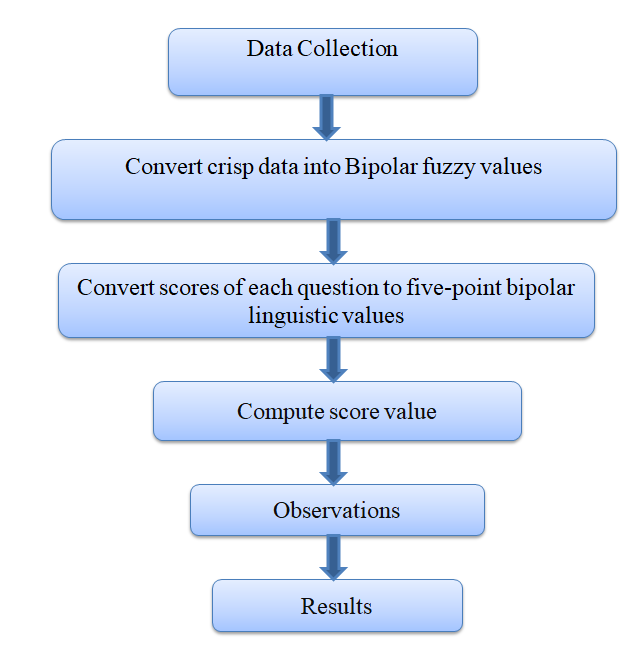
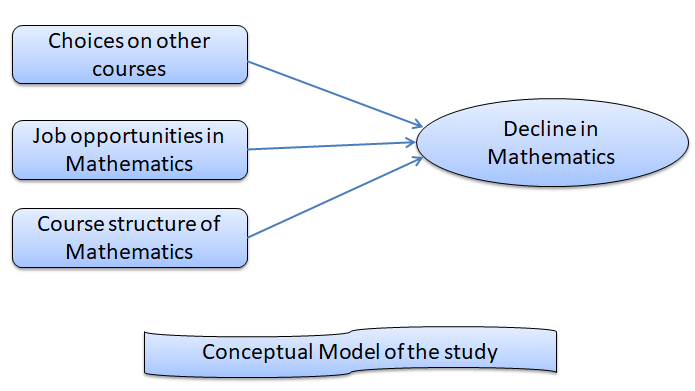
After COVID-19, the study of mathematics has evolved and enriched with various scientific methodologies. Even Nevertheless, there is a drop in students’ decision to pursue a career in mathematics, and curiosity in Mathematics has declined. It is influenced by several variables, notably the difficulty of learning fundamental ideas via the internet and the absence of live instruction, peer problem solving, and discussion that sustains interest in subjects. This exacerbates the situation and makes the trend towards choosing multidisciplinary, technical disciplines over pure mathematics. Meantime, there is a growing need for medical research and other related fields. The changes in mathematics syllabus with less emphasis on particular topics, make students demotivated and lose interest in continuing mathematics at a higher level, their attention is directed towards skill-based or pragmatic subjects. A survey is conducted among the college students in the Vellore district to investigate their opinions about Mathe-matics and other practical disciplines. Figures 1 and 2 depict the algorithm and the conceptual model of the study.
Algorithm:
1. Data Collection: A survey is based on an objective and analytical questionnaire, conducted among
the college students in Vellore district to investigate reasons behind the decline in Mathematics for higher studies. Data is collected via a Google Form survey that focuses on information regarding the interest, course structure, challenges, and career prospects in Mathematics. Further, information on students’ interest in other courses, course structures, and career prospects has been collected.
Conceptual Model of the study:
In this study, we identified four variables: job opportunities in Mathematics (Job), Mathematics course
structure (Course_Struct), other courses (Other_Courses), and decline in Mathematics choice (M aths_decline). The dependent variable was the decline in Mathematics choice, while the independent
variables were job opportunities in Mathematics, Mathematics course structure, and other courses.
Objective of the analysis:
• To measure the extent to which job opportunities in Mathematics dissuade students from choosing
Mathematics for higher studies.
• To evaluate how other applied courses in higher education influence the decision to choose Mathematics.
• To ascertain which aspects of the Mathematics course structure deter students from selecting Mathematics
for higher studies.
Research Hypothesis:
The hypothesis are formulated based on the objective:
H01: There is no significant effect of job opportunities in Mathematics that leads to the decline in Mathematics choice.
H02: There is no significant impact of other applied courses that influence the decrease in Mathematics choice. H03: There is no significant impact of Mathematics course structure that reduces the Mathematics choice. 2. Transformed crisp data into bipolar fuzzy data.
3. Represented the data into 5-point bipolar linguistic value.
4. The score value is computed for all the linguistic values using the definition [4].
5. Observations: A multiple regression test is employed to analyze the study. A multiple correlation co-
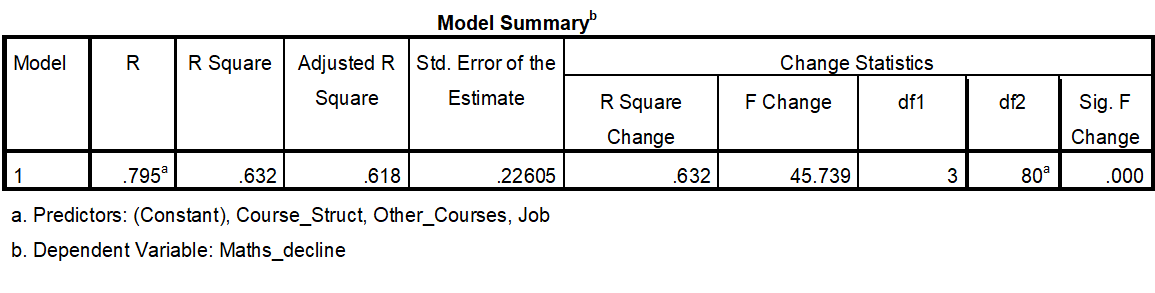
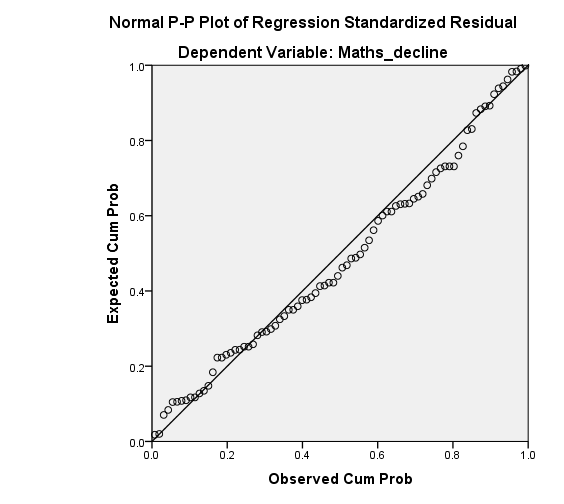
efficient between the predictors and the dependent variable is 0.795, which gives a strong and positive correlation. With an R-Square value of 0.632, the model explains 63.2% of the variation in Decline in Mathematics. The model represents a significant amount of variance (63.2%) in the dependent variable, as depicted in Figure 3. The F-value = 45.739 in Table 12, indicates that the model is statistically significant. The statistical significance
of the model (p < 0.001), implies a strong connection between the predictors and the dependent variable.
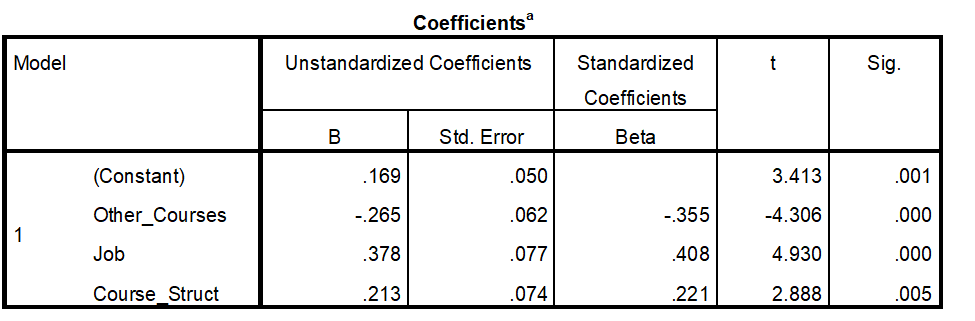
• Job (Beta = 0.408): Among all the factors, Job has the greatest positive effect on M aths_decline.,
as depicted in Figure 4.
• Other_Courses (Beta = -0.355): This indicates that Other_Courses has a relatively substantial negative influence on M aths_decline, as shown in Figure 5.
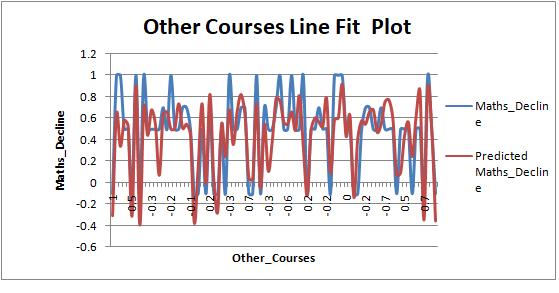
Table 12. ANOVA Test.
This table is shown in the PDF version of the article.
Regression 7.012 3 2.337 45.739 .000 Residual 4.088 80 0.51 0.2017 T otal 11.100 83
• Course_Struct (Beta = 0.221): Course_Struct significantly and positively affects M aths_decline but less strongly.
• The study found that the t-value of 3.413 is a significant predictor, while other courses (t= -4.306) have
a strong negative effect on the independent variable. Job opportunities( (t = 4.930) have the strongest positive effect on the independent variable, while course structure (t = 2.888) has a positive effect on the dependent variable. These findings suggest that job opportunities play a crucial role in predicting outcomes.
6.Results: The regression model is statistically significant, with a large F-statistic (45.739) and a p-value (0.000) confirming its significance as shown in Figure 6. Job (Beta= 0.408) is the most important factor influencing the dependent variable, followed by other courses (Beta= -0.355), which have opposite effects on the dependent variable. All predictors are statistically significant in explaining the decline in Mathematics choice in higher studies.
7. Conclusion
In this study, we developed a novel method that yields the bipolar fuzzy TOPSIS method result in a bipolar environment. The score function is applied in the suggested technique to compute the scores and ascertain the sum of the scores for each possibility. The ranking is given according to the values. The benefits of the
recommended approach are outlined and a comparison study of the various extended fuzzy T OP SIS methods
is offered to support the proposed approach. Eventually, a case study demonstrated the potential uses and effectiveness of the recommended methodology. Additionally, we employed the bipolar scoring function to illustrate the regression results and examine the effect of other parameters in mathematics. In the forthcoming work, we will work on implementing the proposed approach in many fuzzy domains.
Declarations
Acknowledgements
The authors do thankful to the editor for giving an opportunity to submit our research article in this esteemed journal.
Funding
There is no funding support for this work.
Conflict of interest/Competing interests
The authors declared that they have no conflict of interest regarding the publication of the research article.
Availability of data and materials
Enquiries about data availability should be directed to the authors.
Code Availability
Not applicable
Authors’ contribution
GA analyzed and developed the idea of PrIFN and JR applied the technique in the field of decision making. GA and JR verified and approved the final paper.
Human participants and/or Animals
Not applicable.
References
- [1] Mahmood, T., Abdullah, S., Bilal, M., Rashid, S., Multiple criteria decision making based on bipolar valued fuzzy set, Ann Fuzzy Math Inf, 11(6), 1003–1009, 2016.
- [2] Zadeh, Lotfi A., Fuzzy sets, Information and control, 8(3), 338–353, 1965.
- [3] Pawlak, Zdzisław, Rough sets, International journal of computer & information sciences, 11, 341–356, 1982.
- [4] Molodtsov, Dmitriy, Soft set theory—first results, Computers & mathematics with applications, 37(4-5), 19–31, 1999.
- [5] Bellman, Richard E., Zadeh, Lotfi Asker, Decision-making in a fuzzy environment, Management science, 17(4), B–141, 1970.
- [6] Hwang, Ching-Lai, Multiple attributes decision making, Methods and Applications, 1981.
- [7] Triantaphyllou, Evangelos, Lin, Chi-Tun, Development and evaluation of five fuzzy multiattribute decision-making methods, International Journal of Approximate reasoning, 14(4), 281–310, 1996.
- [8] Chen, Chen-Tung, Extensions of the TOPSIS for group decision-making under fuzzy environment, Fuzzy sets and systems, 114(1), 1–9, 2000.
- [9] Tsaur, Sheng-Hshiung, Chang, Te-Yi, Yen, Chang-Hua, The evaluation of airline service quality by fuzzy MCDM, Tourism management, 23(2), 107–115, 2002.
- [10] Akram, Muhammad, Shumaiza, Arshad, Maham, Bipolar fuzzy TOPSIS and bipolar fuzzy ELECTRE-I methods to diagnosis, Computational and Applied Mathematics, 39, 1–21, 2020.
- [11] Bai, Zhi-yong, An interval-valued intuitionistic fuzzy TOPSIS method based on an improved score function, The Scientific World Journal, 2013(1), 879089, 2013.
- [12] Jahanshahloo, Gholam Reza, Lotfi, F Hosseinzadeh, Izadikhah, Mohammad, Extension of the TOPSIS method for decision-making problems with fuzzy data, Applied mathematics and computation, 181(2), 1544–1551, 2006.
- [13] Zhang, W-R, (Yin)(Yang) bipolar fuzzy sets, In 1998 IEEE international conference on fuzzy systems proceedings. IEEE world congress on computational intelligence, 1, 835–840, 1998.
- [14] Deetae, Natthinee, Multiple criteria decision making based on bipolar fuzzy sets application to fuzzy TOPSIS, J. Math. Comput. Sci., 12, Article-ID, 2021.
- [15] Alghamdi, MA, Alshehri, Noura Omair, Akram, Muhammad, Multi-criteria decision-making methods in bipolar fuzzy environ-ment, International Journal of Fuzzy Systems, 20, 2057–2064, 2018.
- [16] Zhang, Wen-Ran, Bipolar fuzzy sets and relations: a computational framework for cognitive modeling and multiagent decision analysis, In NAFIPS/IFIS/NASA’94 Proceedings of The First International Joint Conference of The North American Fuzzy Information Processing Society, 305–309, 1994.
- [17] Wei, Guiwu, Alsaadi, Fuad E, Hayat, Tasawar, Alsaedi, Ahmed, Bipolar fuzzy Hamacher aggregation operators in multiple attribute decision making, International Journal of Fuzzy Systems, 20, 1–12, 2018.
- [18] Ekel, P Ya, Fuzzy sets and models of decision making, Computers & Mathematics with Applications, 44(7), 863–875, 2002.
- [19] Ye, Jun, Improved method of multicriteria fuzzy decision-making based on vague sets, Computer-Aided Design, 39(2), 164–169, 2007.
- [20] Zhang, Wen-Ran, Zhang, Lulu, YinYang bipolar logic and bipolar fuzzy logic, Information Sciences, 165(3-4), 265–287, 2004.
- [21] Gul, Z, Some bipolar fuzzy aggregations operators and their applications in multicriteria group decision making (Doctoral dissertation, M. Phil Thesis), Pakistan, 2015.
- [22] Jana, Chiranjibe, Pal, Madhumangal, Wang, Jian-qiang, Bipolar fuzzy Dombi aggregation operators and its application in multiple-attribute decision-making process, Journal of Ambient Intelligence and Humanized Computing, 10, 3533–3549, 2019.
- [23] Wei, Guiwu, Alsaadi, Fuad E, Hayat, Tasawar, Alsaedi, Ahmed, Hesitant bipolar fuzzy aggregation operators in multiple attribute decision making, Journal of Intelligent & Fuzzy Systems, 33(2), 1119–1128, 2017.
- [24] Jan, Naeem, Gwak, Jeonghwan, Pamucar, Dragan, A robust hybrid decision making model for human-computer interaction in the environment of bipolar complex picture fuzzy soft sets, Information Sciences, 645, 119163, 2023.
- [25] Mani, Gunaseelan, Gnanaprakasam, Arul Joseph, Kausar, Nasreen, Munir, Muhammad, Khan, Salma, Ozbilge, Ebru, Solving an integral equation via intuitionistic fuzzy bipolar metric spaces, Decision Making: Applications in Management and Engineering, 6(2), 536–556, 2023.
- [26] Alghazzawi, Dilshad, Abbas, Sajida, Alolaiyan, Hanan, Khalifa, Hamiden Abd El-Wahed, Alburaikan, Alhanouf, Xin, Qin, Razaq, Abdul, Dynamic bipolar fuzzy aggregation operators: A novel approach for emerging technology selection in enterprise integration, AIMS Mathematics, 9(3), 5407–5430, 2024.
- [27] Deetae, Natthinee, Khamrot, Pannawit, Application of Fuzzy TOPSIS for Multiple criteria decision-making based on interval bipolar fuzzy sets, Computer Science, 17(2), 569–582, 2022.
- [28] Kacprzyk, Janusz, Multistage fuzzy control: a prescriptive approach, John Wiley & Sons, Inc., 1997.
- [29] Zhang, Wen-Ran, Zhang, Lulu, YinYang bipolar logic and bipolar fuzzy logic, Information Sciences, 165(3-4), 265–287, 2004.
- [30] Wang, Yu Chung William, Ho, Shun Chuan, Information systems dispatching in the global environment, Acer, A case of horizontal integration, Journal of Cases on Information Technology (JCIT), 8(2), 45–61, 2006.
- [31] Riaz, Muhammad, Garg, Harish, Athar Farid, Hafiz Muhammad, Chinram, Ronnason, Multi-criteria decision making based on bipolar picture fuzzy operators and new distance measures, Computer Modeling in Engineering & Sciences, 127(2), 771–800, 2021.
- [32] Lee, Keon Myung, Bipolar-valued fuzzy sets and their operations, In Proc. Int. Conf. on Intelligent Technologies, Bangkok, Thailand, 307–312, 2000.
- [33] Sindhu, Muhammad Sarwar, Ahsan, Muhammad, Rafiq, Arif, Khan, IA, Multiple criteria decision making based on bipolar picture fuzzy sets and extended TOPSIS, e Journal of Mathematics and Computer Science, 23(1), 49–57, 2021.
- [34] Akram, Muhammad, Arshad, Maham, A novel trapezoidal bipolar fuzzy TOPSIS method for group decision-making, Group Decision and Negotiation, 28, 565–584, 2019.
- [35] Dincer, Hasan, Hacioglu, Umit, A comparative performance evaluation on bipolar risks in emerging capital markets using fuzzy AHP-TOPSIS and VIKOR approaches, Engineering Economics, 26(2), 118–129, 2015.
- [36] Han, Ying, Lu, Zhenyu, Du, Zhenguang, Luo, Qi, Chen, Sheng, A YinYang bipolar fuzzy cognitive TOPSIS method to bipolar disorder diagnosis, Computer methods and programs in biomedicine, 158, 1–10, 2018.
- [37] Wei, Guiwu, Alsaadi, Fuad E, Hayat, Tasawar, Alsaedi, Ahmed, Bipolar fuzzy Hamacher aggregation operators in multiple attribute decision making, International Journal of Fuzzy Systems, 20, 1–12, 2018.
- [38] Akram, Muhammad, Shumaiza, Smarandache, Florentin, Decision-making with bipolar neutrosophic TOPSIS and bipolar neutrosophic ELECTRE-I, Axioms, 7(2), 33, 2018.
- [39] Neves, Rui Da Silva, Livet, Pierre, Bipolarity in human reasoning and affective decision making, International Journal of Intelligent Systems, 23(8), 898–922, 2008.
- [40] Hung, Chia-Chang, Chen, Liang-Hsuan, A fuzzy TOPSIS decision making model with entropy weight under intuitionistic fuzzy environment, In Proceedings of the International Multi Conference of Engineers and Computer Scientists (IMECS), 1(1), 6–13, 2009.
- [41] Joshi, Deepa, Kumar, Sanjay, Intuitionistic fuzzy entropy and distance measure based TOPSIS method for multi-criteria decision making, Egyptian informatics journal, 15(2), 97–104, 2014.
- [42] Li, Deng-Feng, Nan, Jiang-Xia, Extension of the TOPSIS for multi-attribute group decision making under Atanassov IFS environments, International Journal of Fuzzy System Applications (IJFSA), 1(4), 47–61, 2011.