
Neutrosophic Data Envelopment Analysis: a Comprehensive Review and Current Trends
Abstract
The concept of a neutrosophic set is a comprehensive extension of both fuzzy sets and Intuitionistic Fuzzy Sets (IFSs). It allows decision makers to assign three distinct membership degrees, enabling a more precise representation of uncertainty. Neutrosophic Data Envelopment Analysis (Neu-DEA) is an extended version of the Data Envelopment Analysis (DEA) and Fuzzy DEA (FDEA) concepts. It aims to assess the performance of Decision Making Units (DMUs) within a neutrosophic environment. Neu-DEA specifically tackles the challenges associated with evaluating performance when the input and output data are incomplete, ambiguous, or unsure. As a result, the Neu-DEAs have attracted substantial attention from scholars and academics. This article aims to provide an academic overview of the present state, development patterns, and future research directions of the Neu-DEA research. To do this, the study examines relevant publications using two analytical approaches: description analysis and literature review.
Keywords:Neutrosophic data envelopment analysisPerformance analysisEfficiency analysisNeutrosophic
number.
1. Introduction
The measuring of efficiency has significant importance in the field of management as it enables a deeper comprehension of a unit’s previous achievements and facilitates strategic planning for its future growth. The evaluation of performance is a critical factor in decision-making across a range of domains and real-world situations. The technique of Data Envelopment Analysis (DEA) was first introduced over 45 years ago by Charnes et al. [1]. This method, also referred to as the CCR model, is widely recognized as a practical mathematical approach for evaluating the efficiency of Decision Making Units (DMUs). Following that, Banker et al. [2] modified the CCR model by including the convexity criterion and developed the BCC model for assessing efficiency. The primary benefit of the DEA model lies in its non-parametric nature, use of linear programming methods, capacity to handle multiple inputs and outputs, and its ability to measure efficiency and identify potential improvements. Therefore, the DEA models have garnered significant scholarly interest and has been extensively used in several practical domains. In addition to the commonly used CCR and BCC models, numerous other DEA models have been created from different points of view. These include the Range Adjusted Measure (RAM) [3], additive model [4], Slacks-Based Measure (SBM) model [5], super-efficiency model [6], cross-efficiency DEA model [7], undesirable DEA model [8] and many others. These models provide different approaches to measuring efficiency in DEA and have been widely used in various fields such as finance, economics, healthcare, energy, agriculture, sustainability and operations research [9]- [13]. However, a notable challenge associated with using these conventional approaches is to the acquisition of precise input and output data. Data ambiguity may arise due to a variety of factors, including a lack of understanding or awareness of the data, the unavailability of some data, reliance on expert opinions, the use of language concepts that are difficult to quantify, and the inclusion of data that cannot be measured or quantified. The use of traditional DEA models for performance assessment and ranking of DMUs is not feasible when dealing with imprecise and unclear data. Consequently, it is important to construct DEA models in order to properly address these concerns; otherwise, the reliability and validity of the efficiency scores and rankings of the DMUs may be compromised [14], [15].
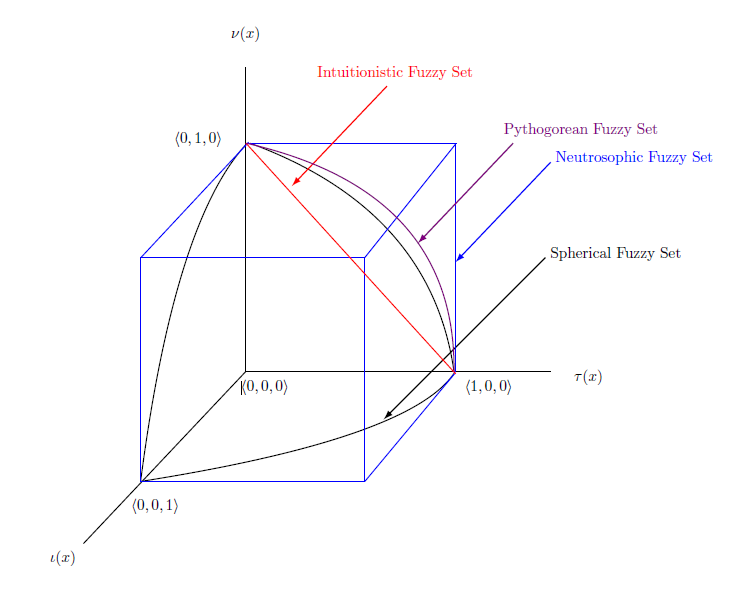
Real-world data often exhibits several sources of uncertainty that need the proper management of such uncertainty. Fuzzy set theory, introduced by Zadeh [16], is a mathematical framework that provides an approach to define and express uncertainty. Fuzzy set theory enables the management of imprecise or ambiguous data by assigning degrees of membership to elements in a set. Fuzzy DEA (FDEA) is a variant of the conventional DEA technique, which integrates fuzzy logic and fuzzy sets to effectively manage imprecise and uncertain data. After that, many authors developed different techniques to solve FDEA models [17]. The solution techniques for the FDEA model may be categorized into several approaches, such as the tolerance technique, α-cut approach, fuzzy ranking approach, the possibility approach, fuzzy arithmetic, multi-objective approach and fuzzy random/type-2 fuzzy set approach. Zhou and Xu [18] provided an overview of FDEA models, hybrid FDEA models and some real-life applications. However, it is important to note that only FS has a single membership value for the uncertain and imprecise data, which may become inadequate in several real-life situations when attempting to depict both supportive and opposing evidence simultaneously. In order to tackle this issue, Atanassov [19] introduced the concept of Intuitionistic Fuzzy Set (IFS), which considers both the degree of truth and the degree of falsehood associated with every piece of information. Several methods have been established in the scientific literature for addressing the DEA model by using IFSs. These approaches may be categorized as the expected value approach [20], the α, β-cut approach [21], parametric approach [22], possibility mean approach [23] and the ranking approach [24]. Recently, other extension of FS like fermatean fuzzy set [25] and spherical fuzzy set [26], [27] are used to construct the DEA models and its solution techniques are developed. The concept of neutrosophic sets was first proposed in the academic literature by Smarandache [28]. This was done as a response to the limitations of IFSs, which were only capable of handling partial information and not indeterminate or contradictory information. neutrosophic set is a generalization of crisp set, fuzzy set, IFS, inconsistent IFS (picture fuzzy set, ternary fuzzy set), Pythagorean fuzzy set, fermatean set, q-rung orthopair fuzzy set, spherical fuzzy set, and n-hyperspherical fuzzy set Fig. 1. neutrosophic sets have been used in several disciplines, including medicine, economics, image processing, decision-making, and risk assessment. This application has facilitated a more sophisticated and comprehensive methodology for representing and analyzing ambiguity and vagueness within real-life scenarios.
In contrast to the conventional literature review approach, this work undertakes a comprehensive examination of existing research on Neu-DEA via the use of bibliometric analysis. Therefore, we are able to provide a thorough overview of the current state of Neu-DEA research, including several dimensions such as authors, publications, keywords, co-citations, publication types, publications by year, and models. These findings may provide further support for the conclusions drawn from the comprehensive literature review. This study examines the existing literature relevant to the Neu-DEA model, which was obtained from the Web of Science (WoS), Scopus and Google Scholar, database.
This review article is organized in the following manner: Section 2 provides a comprehensive assessment of the existing literature on the latest advancements in the Neu-DEA model. Additionally, it conducts a comparative analysis of this model with other approaches in the field. Section 3 provides a bibliometric study of the literature on Neu-DEA, focusing on the publishing trends by year, author, and citation. Section 4 concludes with performing an in-depth review of the future pathways for further research, as well as highlighting a notable limitation that exists in the existing approaches employed in the field of Neu-DEA.
2. Literature Review: Neutrosophic DEA
Neutrosophic Data Envelopment Analysis (Neu-DEA) is a novel approach that has emerged in the realm of performance assessment, specifically designed to handle situations when the observed input and output variables exhibit a high degree of uncertainty. This area has been established by the integration of neutrosophic set and DEA, enabling policymakers to make more precise decisions in the study of performance problems within highly unpredictable environments. In the year 2018, a theoretical development in the form of the Neu-DEA model was proposed by Edalatpanah [29]. This groundbreaking study included several researchers and authors in the development of a solution approach for the Neu-DEA model, aiming to properly quantify the performance of DMUs within a neutrosophic environment. Abdelfattah [30] used triangular neutrosophic number as input and output, and developed a unique solution strategy for the Neu-DEA model, referred known as the parametric approach. This approach involves converting the Neu-DEA model into a crisp interval value DEA model, allowing for the determination of efficiency scores in interval form. Kahraman et al. [31] employed interval value neutrosophic numbers as both input and output in their study. They introduced a new approach that combines Analytic Hierarchy Process (AHP) and DEA. The weights of the inputs and outputs were determined using pairwise comparison matrices derived from neutrosophic AHP. Additionally, deneutrosophication was applied in the DEA application to calculate the relative efficiency of the DMUs. Edalatpanah and Smarandache [32] employed simplified neutrosophic numbers as input and output in BCC model, and then used weighted arithmetic average operator and logarithm technique to convert the neutrosophic BCC model into a corresponding crisp LP model in order to find the relative efficiency of the DMUs. The method suggested by Edalatpanah and Smarandache [32] to solve the neutrosophic BCC model is also used to solve the neutrosophic undesirable BCC model when both desirable and undesirable outputs are present [33]. Again, Edalatpanah [34] introduced a new ranking function for TNN and presented a unique approach to solve the neutrosophic CCR model when TNN inputs and outputs are present. This approach transforms the model into a crisp LP model, making it possible to the determination of the relative efficiency of the DMUs. In their study, Yang et al. [35] used single value neutrosophic numbers as both input and output variables. They utilized a ranking function proposed by Chakraborty et al. [36] to address the neutrosophic CCR model. This approach was applied to evaluate the efficiency of 13 hospitals affiliated with Tehran university of medical sciences in Iran. This study is the first attempt to address the issue of real-world performance assessment by using the Neu-DEA model. Nabeeh [37] developed a novel approach that combines neutrosophic DEMATEL with AR-DEA to enhance the process of technology selection. The DEMATEL first identifies positive and negative areas in the form of cause-and-effect relationships before introducing a system of evaluations for input-output relationships in the context of the technology selection process. Second, the application of AR-DEA to assess the efficiency of DMUs based on AR weight constraints involves multiple decision makers. Öztaş et al. [38] used a Plitogenic set as both the input and output variables. The performance evaluation of 16 hotels located in Cesme, Turkey is conducted using DEA, which depends on the use of subjective assessments that have been aggregated by Plithogenic operators. Tapia [39] developed a novel Neu-DEA model that is specifically designed for the evaluation of Negative Emissions Technologies (NETs). This model incorporates the use of interval value neutrosophic numbers and employs sensitivity analysis to assess the impact of various levels of risk attitudes among experts. Abdelfattah [40] used both a ranking technique and a parametric strategy in order solve the Neu-CCR model, which was utilized to evaluate the relative efficiency of 32 regional hospitals in Tunisia. Monazzam et al. [41] employed the interval value neutrosophic number as an input and output in the Neutrosophic cross efficiency DEA model in order to determine the relative efficiency of the automotive industrial plant in Iran. Jaberi Hafshjani et al. [42] suggested a hybrid BSC-DEA model to calculate DMU efficiency and rank DMUs in a neutrosophic environment. In the hybrid BSC-DEA model, the BSC model is used to measure performance indices, while the neutrosophic DEA model is used to evaluate the efficiency of the DMUs. Again, Tapia et al. [43] utilized the robust tolerance technique to solve the modified neutrosophic CCR model and evaluate the performance of eight energy storage technologies. Mohanta and Toragay [44] introduced a new ranking function specifically designed for pentagonal neutrosophic numbers. This ranking function was used to address the pentagonal neutrosophic DEA model. A unique raking function for the trapezoidal neutrosophic number was developed by Mohanta and Sharanappa [45] and is used to solve the neutrosophic DEA and neutrosophic super efficiency model, which evaluate seaport efficiency and rank them completely. Mohanta et al. [46] created a novel method for solving neutrosophic DEA model termed the possibility mean approach, which converts it into corresponding crisp LP model that assess the efficiency of the DMUs. Mohanta et al. [47] used the possibilistic mean technique to determine the relative efficiency of the 8 AIIMS by considering the inputs and outputs of the SVTrNN. In order to solve the Neu-DEA model and determine the relative efficiency of hospitals, Mohanta and Sharanappa [48] developed a unique ranking technique based on the value and ambiguity index of SVTNN. Again, the possibilistic mean approach is utilized to solve the independent and relational neutrosophic two stage network DEA model to determine the relative efficiency of the Indian insurance sector [48]. Li et al. [49] used the neutrosophic DEA model, which uses neutrosophic numbers as input and output, to measure and assess the safety performance of 35 construction projects in China. Rasinojehdehi and Valami [50] suggested a parametric technique for solving the neutrosophic network DEA model in order to determine the relative efficiency of 13 Iranian airlines. However, by an extensive review of the existing literature, it becomes apparent that several solution techniques have been developed to address various forms of uncertainty in the Neu-DEA model. However, there is a limited number of authors that have used these models to tackle real-world problems. Table 1 presents a comprehensive comparison of the published works on Neu-DEA that use neutrosophic data type, approaches, models, and their applications in real-world problems.
Table 1. Comparative analysis of the neutrosophic DEA literature.
This table is shown in the PDF version of the article.
3. Bibliometric Analysis and Current Research Trends
This section presents a detailed and systematic literature overview of investigations on Neu-DEA. Consequently, a methodical and thorough investigation is conducted across many databases, such as WoS, Scopus, and Google Scholar. The search methodology employed in this study is depicted in Fig. 2. The keywords stated here were queried in the “title, abstract, keywords” sections of publications from the WoS, Scopus, and Google Scholar databases, as indicated in Fig. 2. Subsequently, the removal of duplicate papers is undertaken, while the exclusion of grey literature is implemented. A total of 21 pertinent studies were identified within the Neu-DEA literature spanning the years 2018 to 2023.
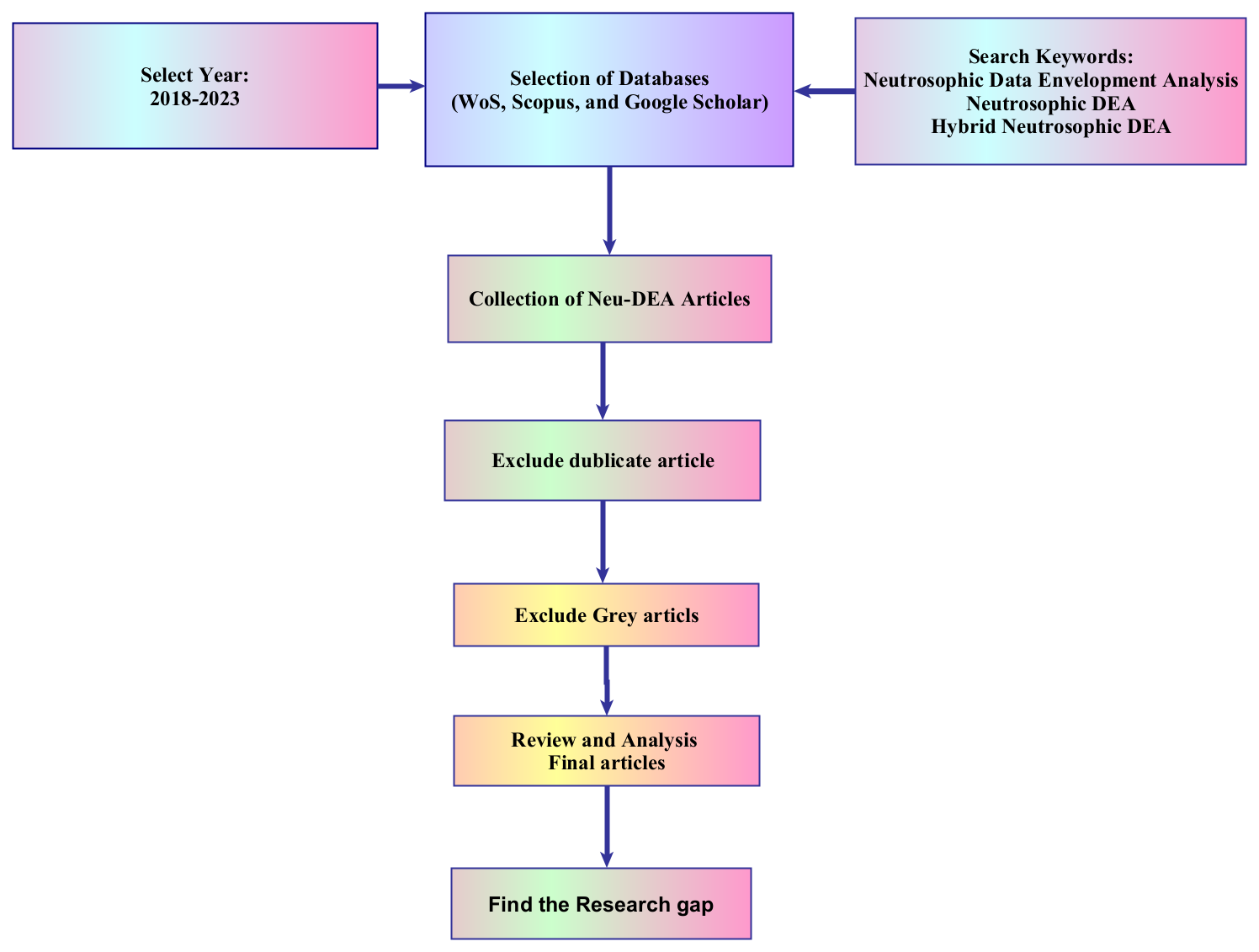
Table 2 presents comprehensive data on the total number of articles published within the domain of neutrosophic DEA, categorized by year, title of article, journal, and citation.
Table 2. The neutrosophic DEA studies.
This table is shown in the PDF version of the article.
[32] 2019 DEA for simplified neutrosophic sets neutrosophic sets and systems 55 [34] 2020 DEA based on triangular neutrosophic numbers CAAI transactions on 60 intelligence technology [33] 2020 A neutrosophic-based approach in DEA with Mathematical problems in 35 undesirable outputs engineering Triangular single valued Neu-DEA : application Symmetry 49 [35] 2020 to hospital performance measurement [37] 2020 A hybrid neutrosophic approach of DEMATEL Neutrosophic sets and systems 15 with AR-DEA in technology selection An alternative approach for performance International conference on 8 [38] 2020 evaluation: Plithogenic sets and DEA intelligent and fuzzy systems [39] 2021 Evaluating NETs using Neu-DEA Journal of cleaner production 20 [40] 2021 Neu-DEA: an application to regional hospitals in neutrosophic sets and systems 7 Tunisia Online simulation optimization using neutrosophic International journal of 1 [41] 2021 cross-efficiency DEA and box–behnken information technology and experimental design (a case study on the decision making automotive paint shop) Enhanced performance evaluation through Neu- Journal of operational and 1 [44] 2023 DEA leveraging pentagonal neutrosophic strategic analytics numbers [47] 2023 Neu-DEA based on the possibilistic mean Operations research and 3 approach decisions [46] 2023 A novel modified approach for solving Neu-DEA Croatian operational research 1 review A novel method for solving Neu-DEA models Soft computing 1 [45] 2023 based on single-valued trapezoidal neutrosophic numbers [51] 2023 Value and ambiguity index-based ranking approach neutrosophic sets and systems 0 for solving Neu-DEA Evaluation of safety-based performance in Management decision 8 [49] 2023 construction projects with Neu-DEA A comprehensive neutrosophic model for Decision making: applications 0 [50] 2023 evaluating the efficiency of airlines based on SBM in management and model of network DEA engineering Development of the neutrosophic two stage Soft computing 0 [48] 2023 network DEA to measure the performance of the insurance industry
Fig. 3 displays the distribution of 22 articles, with one published as a book chapter, one published in conference proceedings, and the other 20 published in academic journals. The majority of publications, including 90.9%, are journal articles, while book chapters and conference papers each account for 4.5% of the total publications.
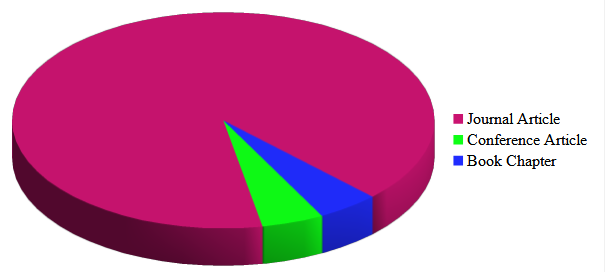
Fig. 4 depicts the quantitative representation of scholarly works related to the neutrosophic DEA approach till the year 2023. In the year 2018, there was a single publication, however, in the following year of 2019, the number of publications increased to three. The year 2020 had a notable rise in the quantity of publications reaching a count of 5. In the following year, 2021, this figure decreased to 4. However, in the year 2022, the number of publications experienced a comparatively lower count of 1. However, there was a decline in the quantity of articles in the year 2022. Currently, a total of eight articles have been published in the year 2023. However, it is anticipated that this figure will see growth before the conclusion of the year.
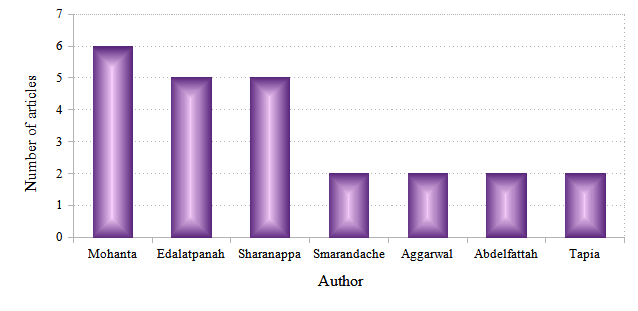
Fig. 5 depicts the distribution of publications among the prominent writers in the field of Neu-DEA literature. K. K. Mohanta is the most prominent researcher in the subject of neutrosophic DEA, having authored six publications, which is around 27% of the overall scholarly contributions in this domain. S. A. Edalatpanah and D. S. Sharanappa are the second most prolific researchers, having authored five publications apiece, which accounts for nearly 23% of the total reports. Following closely behind are F. Smarandache, A. Aggarwal, W. Abdelfattah, and J. F. D. Tapia, each having contributed two articles. Several other writers have made significant contributions to this area via their own works. These authors include W. Yang, L. Cai, M. Jaberi Hafshjani, S.E. Najafi, F. Hosseinzadeh Lotfi, S.M. Hajimolana, X. Mao, Z. Guoxi, M. Fallah, and so on.
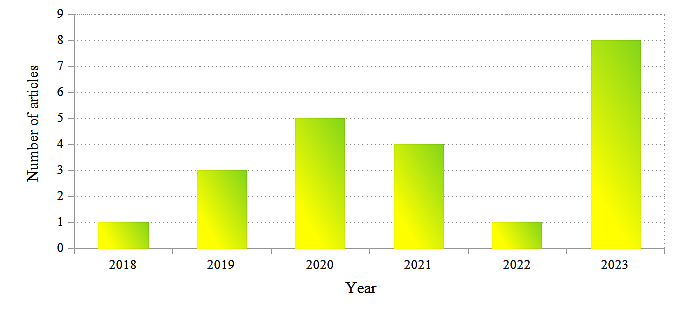
Fig. 6 is an illustration of the distribution of publications among the top articles in the field of Neu-DEA literature, with a particular emphasis on the top 10 works that have received the most citations. The article with the highest number of citations in the field of Neu-DEA is referenced as [34] and was published in 2020 by Edalatpanah. Following this, the second most cited article is referenced as [32] and was published in 2019 by Edalatpanah, and Smarandache. The third most cited article, referenced as [35], was published in 2020 by Yang, Cai, Edalatpanah, and Smarandache. Moving on, the fourth most cited article, referenced as [29], was published in 2018 by Edalatpanah. The fifth most cited article, referenced as [33], was published in 2020 by Mao, Guoxi, Fallah, and Edalatpanah. Similarly, the sixth most cited article, referenced as [30], was published in 2019 by Abdelfattah. The seventh most cited article, referenced as [31], was published in 2019 by Kaharaman et al. Continuing, the eighth most cited article, referenced as [39], was published in 2021 by Tapia. The ninth most cited article, referenced as [37], was published in 2020 by Nabeeh. Lastly, the tenth most cited article, referenced as [42], was published in 2021 by Jaberi Hafshjani, Najafi, Hosseinzadeh Lotfi, and Hajimolana.
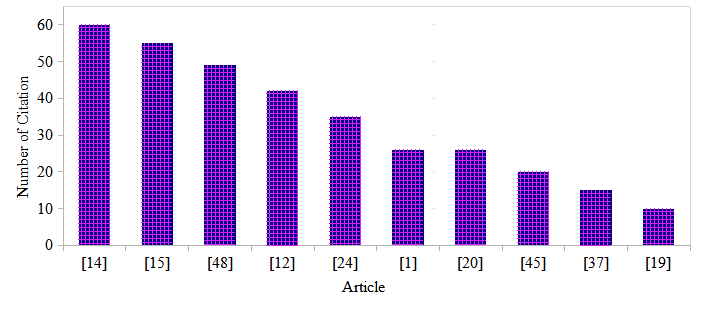
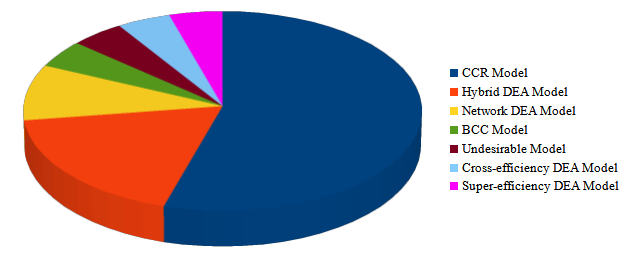
Fig. 7 is a schematic diagram illustrating the various neutrosophic DEA models. Among the 22 publications analysed, 12 were found to be based on the CCR model, while 4 articles used the hybrid DEA model. Additionally, 2 articles were based on the network DEA approach, while 1 article each focused on the BCC model, undesirable model, the cross-efficiency DEA model, and the super-efficiency DEA model. The article published in the field of Neu-DEA aims to measure efficiency by developing traditional DEA models. Specifically, 54.54% of the articles focus on the CCR model, 18.18% on the Hybrid DEA model, 9.09% on the network DEA model, and each of the BCC model, undesirable model, cross-efficiency DEA model, and super-efficiency DEA model represent 4.54% of the articles.
4. Conclusions and Future Directions
The integration of DEA method and neutrosophic set in context of neutrosophic DEA, is one of the applicable and effective approach that wieldy employed for performance measurement of DMUs under highly data ambiguity. Accordingly, this paper introduced a comprehensive literature review of neutrosophic DEA. Moreover, all Neu-DEA studies are analysed and classified according to several aspects and factors such as bibliometric information, the features and objectives of the Neu-DEA model, real-world application and case study, basic DEA model, characteristics of DEA modelling.
The present study has identified that a significant proportion of research pertaining to DEA in a neutrosophic environment has been carried out within the domains of business economics, engineering, and operations research and management science. The bibliometric study revealed K. K. Mohanta, S.A. Edalatpanah, D.S. Sharanappa, F. Smarandache, A. Aggarwal, W. Abdelfattah, and J.F.D. Tapia as the most prolific writers in this particular discipline. The contributors [34], [32] have produced publications that have received significant citations in this particular topic. The following scholarly publications have published works on the topic of neutrosophic DEA: soft computing, journal of cleaner production, neutrosophic sets and systems, expert systems, CAAI transactions on intelligence technology, and operations research and decisions. The current literature in this particular domain has been mostly concerned with the advancement of solution methodologies for Neu-DEA models. Academic researchers are now engaged in efforts to address the difficulties associated with navigating complicated and unpredictable efficiency environments.
Based on the categorization, observations, and comments presented in the preceding parts, this section will outline the suggested research fronts in the area of Neu-DEA. These recommended fronts aim to provide guidance for future research efforts. The following domains are recommended for further investigation:
I. Neu-DEA models may be formulated in the context of negative data, undesirable factors, non-discretionary factors, and dual-role factors.
II. The development of Neutrosophic Network Data Envelopment Analysis (Neu-NDEA) enables the evaluation and ranking of homogeneous DMUs with a network topology, including two-stage, series, parallel, and mixed configurations.
III. The development of Neutrosophic Dynamic Data Envelopment Analysis (Neu-DDEA) enables the assessment of dynamic efficiency of DMUs using neutrosophic panel data. This is achieved via the integration of Dynamic Data Envelopment Analysis (DDEA), Malmquist Productivity Index (MPI), and Window Data Envelopment Analysis (WDEA) techniques.
IV. The development of hybrid neutrosophic DEA-MCDM techniques by integrating DEA and MCDM techniques using neutrosophic data to measure the relative efficiency and to completely rank the DMUs. V. The Neu-DEA models, whether in their original form or with further modifications, may be effectively used for the assessment of performance and productivity in many real-world issues and applications.
Author Contributions
Conceptualization, methodology, writing-creating the initial design: KKM; writing-reviewing and editing: DSS. All authors have read and agreed to the published version of the manuscript.
Funding
No specific funding was received for this research.
Conflicts of Interest
The authors declare no conflict of interest.
References
- [1] Charnes, A., Cooper, W. W., & Rhodes, E. (1978). Measuring the efficiency of decision making units. European journal of operational research, 2(6), 429–444. https://www.sciencedirect.com/science/article/pii/0377221778901388
- [2] Banker, R. D., Charnes, A., & Cooper, W. W. (1984). Some models for estimating technical and scale inefficiencies in data envelopment analysis. Management science, 30(9), 1078–1092. https://doi.org/10.1287/mnsc.30.9.1078
- [3] Cooper, W. W., Park, K. S., & Pastor, J. T. (1999). RAM: a range adjusted measure of inefficiency for use with additive models, and relations to other models and measures in DEA. Journal of productivity analysis, 11, 5–42. https://doi.org/10.1023/A:1007701304281
- [4] Seiford, L. M., & Thrall, R. M. (1990). Recent developments in DEA: the mathematical programming approach to frontier analysis. Journal of econometrics, 46(1-2), 7-38. https://www.sciencedirect.com/science/article/pii/030440769090045U
- [5] Tone, K. (2001). A slacks-based measure of efficiency in data envelopment analysis. European journal of operational research, 130(3), 498–509. https://www.sciencedirect.com/science/article/pii/S0377221799004075
- [6] Andersen, P., & Petersen, N. C. (1993). A procedure for ranking efficient units in data envelopment analysis. Management science, 39(10), 1261–1264. https://doi.org/10.1287/mnsc.39.10.1261
- [7] Sexton, T. R., Silkman, R. H., & Hogan, A. J. (1986). Data envelopment analysis: critique and extensions. New directions for program evaluation, 1986(32), 73–105. https://doi.org/10.1002/ev.1441
- [8] Seiford, L. M., & Zhu, J. (2002). Modeling undesirable factors in efficiency evaluation. European journal of operational research, 142(1), 16–20. https://www.sciencedirect.com/science/article/pii/S0377221701002934
- [9] Liu, J. S., Lu, L. Y., Lu, W. M., & Lin, B. J. (2013). A survey of DEA applications. Omega, 41(5), 893–902. https://www.sciencedirect.com/science/article/pii/S0305048312002186
- [10] Mardani, A., Zavadskas, E. K., Streimikiene, D., Jusoh, A., & Khoshnoudi, M. (2017). A comprehensive review of data envelopment analysis (DEA) approach in energy efficiency. Renewable and sustainable energy reviews, 70, 1298–1322. https://www.sciencedirect.com/science/article/pii/S1364032116310875
- [11] Mohanta, K. K., Sharanappa, D. S., & Aggarwal, A. (2021). Efficiency analysis in the management of COVID-19 pandemic in India based on data envelopment analysis. Current research in behavioral sciences, 2, 100063. https://www.sciencedirect.com/science/article/pii/S2666518221000504
- [12] Chaubey, V., Sharanappa, D. S., Mohanta, K. K., Mishra, V. N., & Mishra, L. N. (2022). Efficiency and productivity analysis of the indian agriculture sector based on the malmquist-DEA. Universal journal of agricultural research, 10(4), 331–343. https://www.researchgate.net/profile/Kshitish-Mohanta/publication/362412506_Efficiency_and_Productivity_Analysis_of_the_Indian_Agriculture_Sector_B ased_on_the_Malmquist-DEA_Technique/links/62e8e7de9d410c5ff37d5449/Efficiency-and-Productivity-Analysis-of-t
- [13] Kohl, S., Schoenfelder, J., Fügener, A., & Brunner, J. O. (2019). The use of data envelopment analysis (DEA) in healthcare with a focus on hospitals. Health care management science, 22(2), 245–286. DOI:10.1007/s10729-018- 9436-8
- [14] Zhu, J. (2003). Imprecise data envelopment analysis (IDEA): a review and improvement with an application. European journal of operational research, 144(3), 513–529. https://www.sciencedirect.com/science/article/pii/S0377221701003927
- [15] Emrouznejad, A., & Tavana, M. (2013). Performance measurement with fuzzy data envelopment analysis (Vol. 309). Springer.
- [16] Zadeh, L. A. (1965). Fuzzy sets. Information and control, 8(3), 338–353. https://www.sciencedirect.com/science/article/pii/S001999586590241X
- [17] Emrouznejad, A., Tavana, M., & Hatami-Marbini, A. (2014). The state of the art in fuzzy data envelopment analysis. Performance measurement with fuzzy data envelopment analysis, 1-45. Springer, Berlin, Heidelberg. https://doi.org/10.1007/978-3-642-41372-8_1
- [18] Zhou, W., & Xu, Z. (2020). An overview of the fuzzy data envelopment analysis research and its successful applications. International journal of fuzzy systems, 22(4), 1037–1055. https://doi.org/10.1007/s40815-020-00853-6
- [19] Atanassov, K. T. (1986). Intuitionistic fuzzy sets. Fuzzy sets and systems, 20(1), 87–96. https://www.sciencedirect.com/science/article/pii/S0165011486800343
- [20] Puri, J., & Yadav, S. P. (2015). Intuitionistic fuzzy data envelopment analysis: an application to the banking sector in India. Expert systems with applications, 42(11), 4982–4998. https://www.sciencedirect.com/science/article/pii/S095741741500113X
- [21] Arya, A., & Yadav, S. P. (2019). Development of intuitionistic fuzzy data envelopment analysis models and intuitionistic fuzzy input–output targets. Soft computing, 23(18), 8975–8993. https://doi.org/10.1007/s00500-018-3504-3
- [22] Shakouri, B., Abbasi Shureshjani, R., Daneshian, B., & Hosseinzadeh Lotfi, F. (2020). A parametric method for ranking intuitionistic fuzzy numbers and its application to solve intuitionistic fuzzy network data envelopment analysis models. Complexity, 2020, 1-25. https://doi.org/10.1155/2020/6408613
- [23] Mohanta, K. K., & Sharanappa, D. S. (2023). A novel technique for solving intuitionistic fuzzy DEA model: an application in indian agriculture sector. https://doi.org/10.21203/rs.3.rs-2462648/v2
- [24] Edalatpanah, S. A. (2019). A data envelopment analysis model with triangular intuitionistic fuzzy numbers. International journal of data envelopment analysis, 7(4), 47–58. https://ijdea.srbiau.ac.ir/article_15366.html
- [25] Akram, M., Shah, S. M. U., Al-Shamiri, M. M. A., & Edalatpanah, S. A. (2023). Extended DEA method for solving multi-objective transportation problem with Fermatean fuzzy sets. Aims math, 8, 924–961. https://www.aimspress.com/aimspress-data/math/2023/1/PDF/math-08-01-045.pdf
- [26] Mohanta, K. K., Sharanappa, D. S., Dabke, D., Mishra, L. N., & Mishra, V. N. (2022). Data envelopment analysis on the context of spherical fuzzy inputs and outputs. European journal of pure and applied mathematics, 15(3), 1158–1179. https://www.ejpam.com/index.php/ejpam/article/view/4391
- [27] Mohanta, K. K., & Sharanappa, D. S. (2022). The spherical fuzzy data envelopment analysis (SF-DEA): a novel approach for efficiency analysis. AIJR abstracts, 52. https://books.aijr.org/index.php/press/catalog/book/138/chapter/2085
- [28] Smarandache, F. (1999). A unifying field in Logics: Neutrosophic Logic. In Philosophy (pp. 1-141). American Research Press. https://core.ac.uk/download/pdf/84931.pdf
- [29] Edalatpanah, S. A. (2018). Neutrosophic perspective on DEA. Journal of applied research on industrial engineering, 5(4), 339–345. https://doi.org/10.22105/jarie.2019.196020.1100
- [30] Abdelfattah, W. (2019). Data envelopment analysis with neutrosophic inputs and outputs. Expert systems, 36(6), e12453. https://doi.org/10.1111/exsy.12453
- [31] Kahraman, C., Otay, İ., Öztayşi, B., & Onar, S. Ç. (2019). An integrated AHP & DEA methodology with neutrosophic sets. Fuzzy multi-criteria decision-making using neutrosophic sets, 623-645. https://doi.org/10.1007/978-3-030-00045-5_24
- [32] Edalatpanah, S. A., & Smarandache, F. (2019). Data envelopment analysis for simplified neutrosophic sets. Neutrosophic sets and systems, 29. https://digitalrepository.unm.edu/nss_journal/vol29/iss1/17/
- [33] Mao, X., Guoxi, Z., Fallah, M., & Edalatpanah, S. A. (2020). A neutrosophic-based approach in data envelopment analysis with undesirable outputs. Mathematical problems in engineering, 2020, 1-8. https://www.hindawi.com/journals/mpe/2020/7626102/
- [34] Edalatpanah, S. A. (2020). Data envelopment analysis based on triangular neutrosophic numbers. CAAI transactions on intelligence technology, 5(2), 94–98. https://doi.org/10.1049/trit.2020.0016
- [35] Yang, W., Cai, L., Edalatpanah, S. A., & Smarandache, F. (2020). Triangular single valued neutrosophic data envelopment analysis: application to hospital performance measurement. Symmetry, 12(4), 588. https://www.mdpi.com/2073-8994/12/4/588
- [36] Chakraborty, A., Mondal, S. P., Ahmadian, A., Senu, N., Alam, S., & Salahshour, S. (2018). Different forms of triangular neutrosophic numbers, de-neutrosophication techniques, and their applications. Symmetry, 10(8),
- [327] https://www.mdpi.com/2073-8994/10/8/327
- [37] Nabeeh, N. (2020). A hybrid neutrosophic approach of DEMATEL with AR-DEA in technology selection. Neutrosophic sets and systems, 31, 17-30. https://digitalrepository.unm.edu/nss_journal/vol31/iss1/2/
- [38] Öztaş, G. Z., Adalı, E. A., Tuş, A., Öztaş, T., & Özçil, A. (2020). An alternative approach for performance evaluation: plithogenic sets and DEA. International conference on intelligent and fuzzy systems (pp. 742-749). Cham: Springer International Publishing. https://doi.org/10.1007/978-3-030-51156-2_86
- [39] Tapia, J. F. D. (2021). Evaluating negative emissions technologies using neutrosophic data envelopment analysis. Journal of ceaner production, 286, 125494. https://www.sciencedirect.com/science/article/pii/S0959652620355402
- [40] Abdelfattah, W. (2021). Neutrosophic data envelopment analysis: an application to regional hospitals in Tunisia. Neutrosophic sets and systems, 41, 89-105. https://fs.unm.edu/NSS/NeutrosophicDataEnvelopmentAnalysis6.pdf
- [41] Monazzam, N., Alinezhad, A., & Malek, H. (2021). Online simulation optimization using neutrosophic cross-efficiency DEA and box–behnken experimental design (a case study on the automotive paint shop). International journal of information technology & decision making, 20(6), 1657–1684. https://doi.org/10.1142/S0219622021500462
- [42] Jaberi Hafshjani, M., Najafi, S. E., Hosseinzadeh Lotfi, F., & Hajimolana, S. M. (2021). A hybrid BSC-DEA model with indeterminate information. Journal of mathematics, 2021, 1-14. DOI:10.1155/2021/8867135 https://www.hindawi.com/journals/jmath/2021/8867135/
- [43] Tapia, J. F. D., Ortenero, J. R., & Tan, R. R. (2022). Selection of energy storage technologies under neutrosophic decision environment. Cleaner engineering and technology, 11, 100576. https://www.sciencedirect.com/science/article/pii/S2666790822001811
- [44] Mohanta, K. K., & Toragay, O. (2023). Enhanced performance evaluation through neutrosophic data envelopment analysis leveraging pentagonal neutrosophic numbers. Journal of operational and strategic analytics, 1(2), 70–80. https://www.researchgate.net/profile/Kshitish-Mohanta/publication/371982852_Enhanced_Performance_Evaluation_Through_Neutrosophic_Data_Envelop ment_Analysis_Leveraging_Pentagonal_Neutrosophic_Numbers/links/64a4d4f3c41fb852dd4de796/Enhanced -Performance-Evalu
- [45] Mohanta, K. K., & Sharanappa, D. S. (2023). A novel method for solving neutrosophic data envelopment analysis models based on single-valued trapezoidal neutrosophic numbers. Soft computing, 27(22), 17103–17119. https://doi.org/10.1007/s00500-023-08872-9
- [46] Mohanta, K. K., Sharanappa, D. S., & Aggarwal, A. (2023). A novel modified Khatter’s approach for solving neutrosophic data envelopment analysis. Croatian operational research review, 14(1), 15–28. https://hrcak.srce.hr/ojs/index.php/crorr/article/view/22530
- [47] Mohanta, K. K., Sharanappa, D. S., & Mishra, V. N. (2023). Neutrosophic data envelopment analysis based on the possibilistic mean approach. Operations research and decisions, 33(2), 81–98. https://cejsh.icm.edu.pl/cejsh/element/bwmeta1.element.desklight-b30c97c3-5022-46b0-b971-ffac67d06aeb
- [48] Mohanta, K. K., Sharanappa, D. S., & Aggarwal, A. (2023). Value and ambiguity Index-based ranking approach for solving neutrosophic data envelopment analysis. Neutrosophic sets and systems, 57(1), 25. https://digitalrepository.unm.edu/cgi/viewcontent.cgi?article=2370&context=nss_journal
- [49] Mohanta, K. K., & Sharanappa, D. S. (2023). Development of the neutrosophic two-stage network data envelopment analysis to measure the performance of the insurance industry. Soft computing. https://doi.org/10.1007/s00500-023-09294-3
- [50] Li, J., Alburaikan, A., & de Fátima Muniz, R. (2023). Evaluation of safety-based performance in construction projects with neutrosophic data envelopment analysis. Management decision, 61(2), 552–568. https://doi.org/10.1108/MD-02-2022-0237
- [51] Rasinojehdehi, R., & Valami, H. B. (2023). A comprehensive neutrosophic model for evaluating the efficiency of airlines based on SBM model of network DEA. Decision making: applications in management and engineering, 6(2), 880–906. https://dmame-journal.org/index.php/dmame/article/view/729